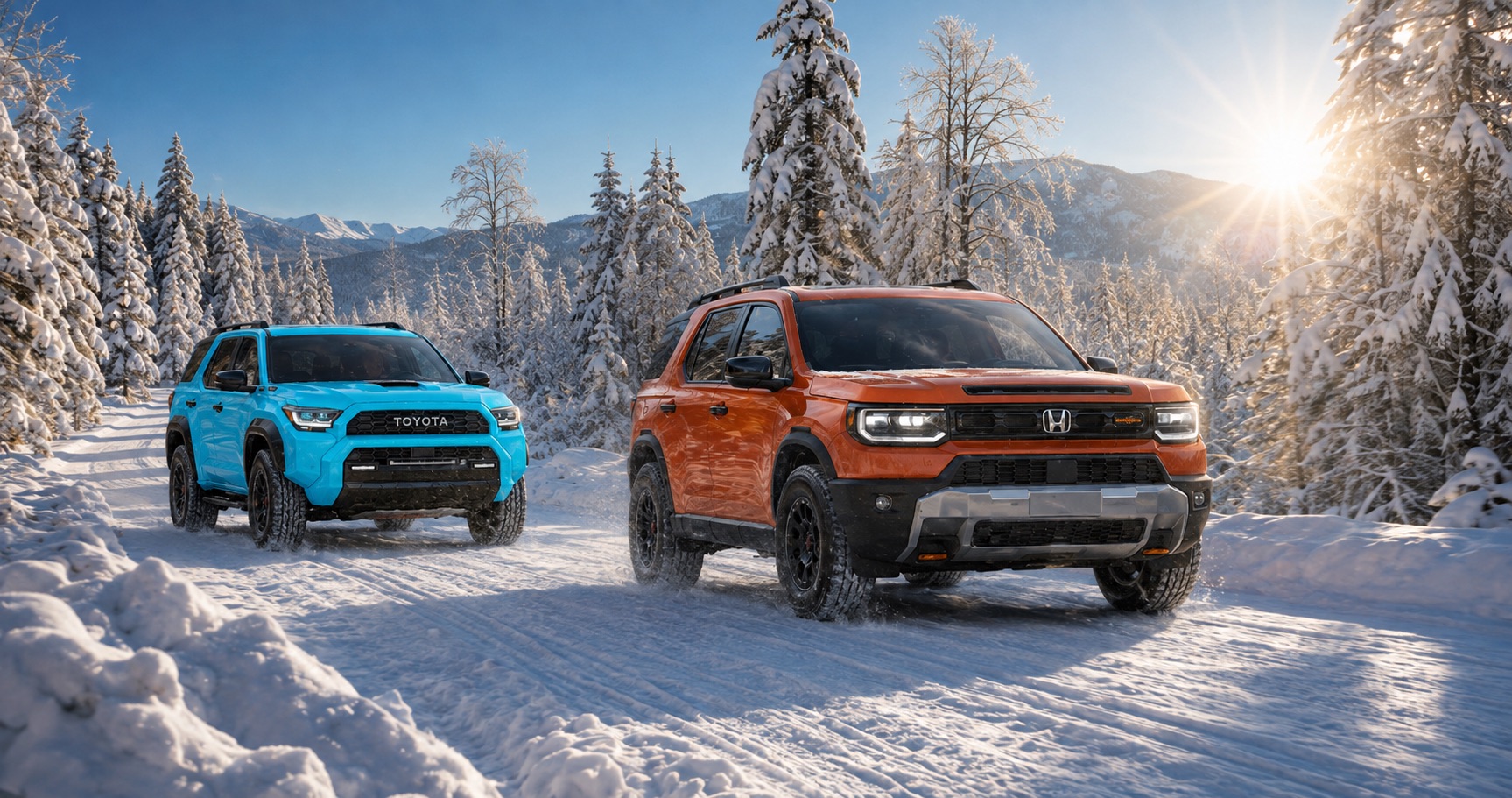
Rugged Midsize SUV Comparison
2026 Honda Passport vs 2026 Toyota 4Runner
A 4Runner Alternative for Hudson Valley Drivers
The 2026 Honda Passport and 2026 Toyota 4Runner overlap in the same rugged midsize-SUV conversation, but they solve it from different foundations. The Passport is a two-row, unibody SUV with a naturally aspirated V6, standard torque-vectoring all-wheel drive, generous passenger room, and TrailSport hardware designed to add real rough-road ability without turning daily driving into a truck-like experience. The 4Runner uses body-on-frame construction, offers rear-wheel drive or 4WD depending on configuration, and reaches further into specialized off-road territory with available locking-differential, Crawl Control, Stabilizer Disconnect, Trailhunter, and TRD Pro hardware.
That makes the Passport worth cross-shopping with a 4Runner even though the two SUVs solve the problem differently. Toyota gives shoppers more branches to choose from—including greater trailer capacity, an electrified powertrain, extra-seat availability on eligible gas models, and highly specialized trail trims. Honda counters with standard AWD, generous two-row passenger room, a shorter body, and a road-first character that may fit more of your actual mileage.
For drivers around Middletown, Newburgh, Warwick, Monroe, Port Jervis, and the wider Hudson Valley, this comparison focuses on those tradeoffs rather than declaring an automatic winner. Use it to compare equivalent configurations, separate everyday advantages from specialized capability, and decide which vehicle deserves the closer look for winter roads, highway travel, family gear, towing, and weekends beyond the pavement.
Which Rugged SUV Fits the Way You Actually Drive?
Choose the priority that most strongly shapes your SUV decision. The result is a first lean—not a verdict—then the comparison panels below pressure-test it against powertrain, MPG, passenger space, towing, trail hardware, technology, reliability, and price.
Based on This Priority
Two-Row Space & Daily Comfort Matter
Start With the Passport
Who This Favors
Drivers who carry four or five people more often than seven and want generous rear-seat room, easy cargo use, and a composed daily-driving experience.
Why It Points Here
Passport is built only as a roomy two-row SUV, with 40.9 inches of second-row legroom, standard AWD, and up to 44.0 cubic feet of cargo room behind the second row.
The Difference You Feel From the Driver’s Seat
Unibody vs Body-on-Frame:
Why the Passport and 4Runner Drive So Differently
The Passport and 4Runner are built on fundamentally different foundations. Passport uses unibody construction, where the body and primary structure work together as one integrated chassis. 4Runner uses body-on-frame construction, with the passenger body mounted to a separate truck-style frame. Those different foundations help shape how each SUV behaves, but suspension tuning, ground clearance, tires, and drivetrain hardware also determine how far each can go on- and off-road. In practice, the Passport generally feels more precise and settled on pavement, while the 4Runner’s specialized off-road trims reach further when terrain becomes genuinely technical.
Real-World Analysis
The Better Architecture Depends on Where You Spend Your Miles
If most of your year is spent commuting, covering highway miles, handling winter roads and carrying passengers—with gravel roads and moderate trails mixed in—the Passport’s unibody structure and independent suspension become advantages you can use almost every day. Its more settled ride and precise responses come with legitimate trail capability, particularly in TrailSport form.
The 4Runner’s body-on-frame platform, combined with its more specialized suspension and 4WD hardware, becomes more valuable as the terrain gets more technical. Large rocks, deep cross-axle obstacles, ledges and routes that demand maximum articulation, clearance and low-range control push the advantage toward Toyota’s more specialized trims.
The distinction is not road capable versus off-road capable; it is where each SUV reaches its limit. Passport gives up some capability at the extreme end of the trail for better everyday road behavior, while 4Runner accepts more truck-like road manners to preserve a higher technical-terrain ceiling.
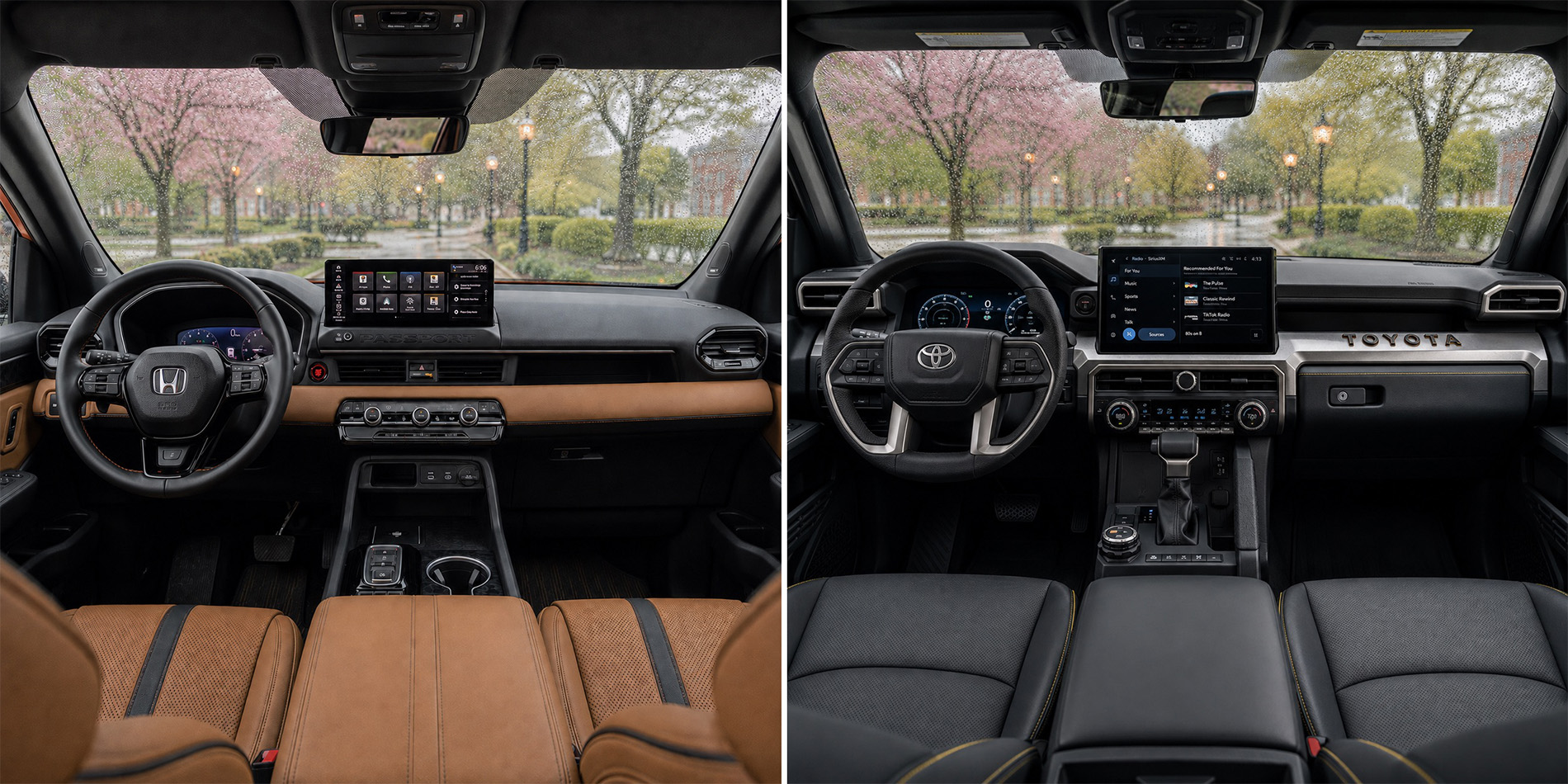
Compare the Tradeoffs Behind the Passport-vs-4Runner Decision
Use the comparison panels to separate everyday fit from specialized capability. Passport’s standard AWD is compared with 4Runner 4WD when traction matters, while Toyota’s RWD starting price and available hybrid are identified explicitly. Reliability is also separated into model-level and broader brand-level signals so one source does not decide the ownership-confidence question by itself.
Independent Review Context
Car and Driver Scores Passport 10/10 and Gas 4Runner 8.5/10
Car and Driver sees both as credible answers for shoppers who want more capability than a typical two-row crossover. Its reviews distinguish them less by whether they can handle adventure and more by how they balance that capability with comfort, refinement and everyday usability.
Car and Driver
2026 Honda Passport
Ranks #1 Mid-Size Two-Row SUV
Editors' Choice & 10Best Awards
Review takeaway: Car and Driver sees the Passport as an unusually well-rounded rugged SUV, praising its quiet cabin, abundant passenger and cargo room, pleasant ride and controlled road manners.
They also likes the smooth, linear response of its V6 and how TrailSport adds credible off-road ability without making the Passport feel clumsy or truck-like in everyday driving. In instrumented testing, a Passport TrailSport reached 60 mph in 7.3 seconds.
Car and Driver
2026 Toyota 4Runner
Ranks #6 Mid-Size Two-Row SUV
Review takeaway: Car and Driver finds the redesigned 4Runner noticeably more refined on the road while preserving the rugged character that defines it.
They praise its all-terrain capability, good outward visibility, quick steering and modern, easy-to-use infotainment, and describes it as especially entertaining in the dirt. It still feels distinctly truck-based from behind the wheel, which is part of the tradeoff for its more specialized capability. In instrumented testing, a four-wheel-drive gas 4Runner reached 60 mph in 7.5 seconds.
What the reviews suggest:
Car and Driver’s evaluation favors the Passport as the more complete all-around package, particularly for shoppers who want generous space, refined road manners and meaningful off-road ability in the same SUV. The 4Runner remains strongly rated for a different reason: it preserves more of the truck-based character and specialized trail capability that make it distinctive while becoming easier to live with on pavement.
Use a Passport Test-Drive to Answer the Remaining Questions
Once the specs narrow the choice, a test drive can answer the rest.
See how the Passport’s performance, comfort, visibility, and everyday usability feel firsthand.
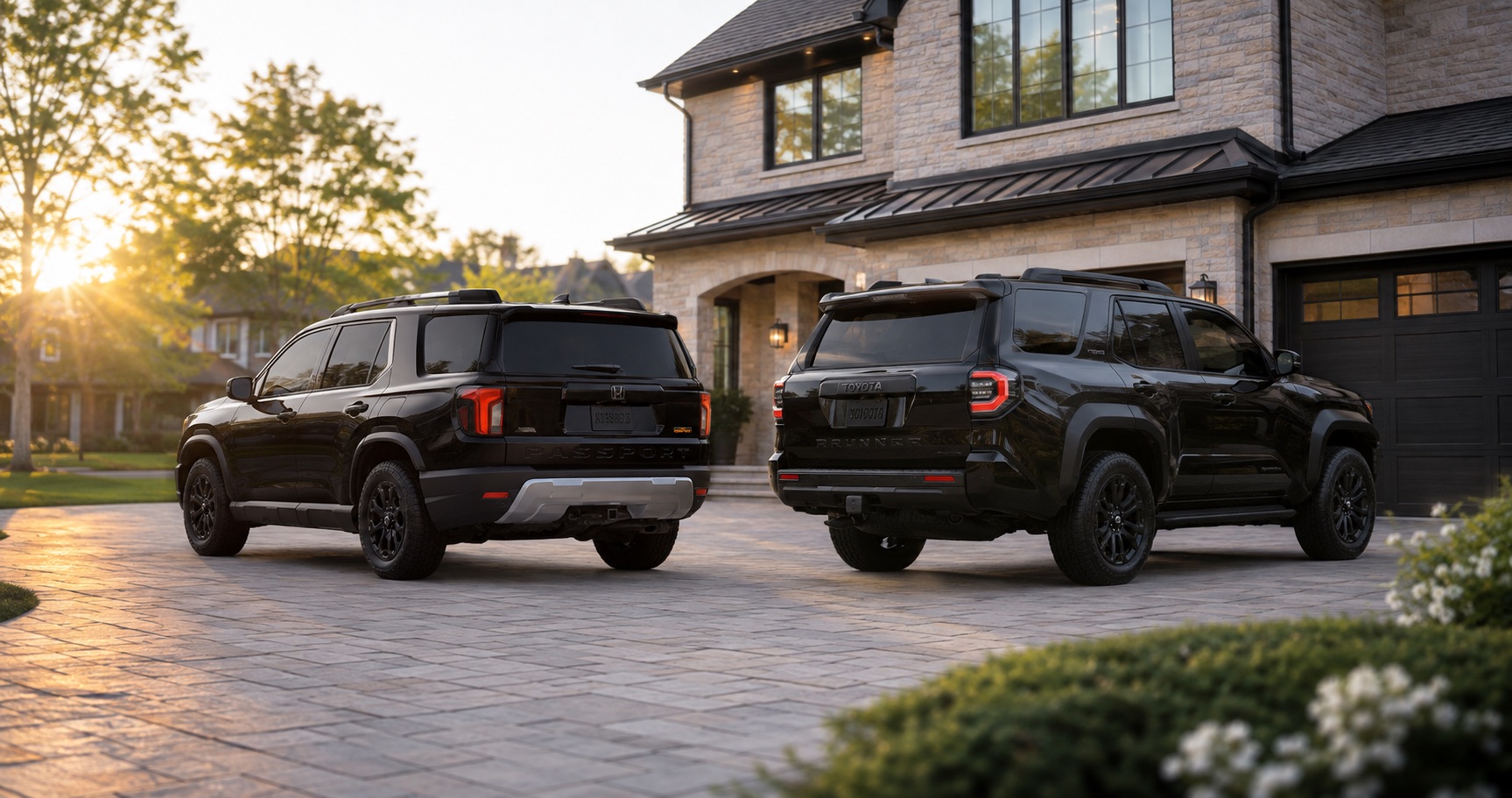
How the Passport–4Runner Tradeoffs Add Up
Pick the SUV Whose Extra Capability You Will Actually Use
For most Hudson Valley shoppers, the choice can be reduced to one threshold question: do you need a 4Runner capability the Passport cannot match, or do you want ruggedness without designing the entire vehicle around the most extreme use case? If five-passenger space, standard AWD, road composure, cargo use, and moderate trail access describe most of your calendar, the Passport deserves the first drive.
Keep the 4Runner in front when the requirement is structural rather than aspirational: a loaded trailer above the Passport’s 5,000-pound ceiling, occasional third-row seating, the i-FORCE MAX path, or specialized low-range trail hardware. Those are capabilities Honda does not duplicate, and they can outweigh the Passport’s daily-use strengths for the right owner.
Reliability does not create a clean model-level tiebreaker: current Auto Reliability Index and Consumer Reports signals are strong for both SUVs. Toyota does hold the stronger Consumer Reports brand-level reliability ranking and has one additional model year of current-generation 4Runner ownership history, which gives it a broader ownership-confidence edge without turning the Passport into a weak reliability choice.
That is why the Passport works best as a 4Runner alternative rather than a 4Runner imitation. If none of Toyota’s unique thresholds is non-negotiable, compare how the Passport fits the miles and passengers you deal with every week. If one of those thresholds is essential, keep the 4Runner at the top of the list.
Still somewhere in the gray area?
The quick quiz below turns those tradeoffs into a few real-world choices and shows which SUV better matches the way you actually plan to use it.
2026 Honda Passport vs Toyota 4Runner FAQs
Bring the Comparison Back to a Specific Passport
At Middletown Honda, the useful next step is to choose the Passport version that best matches the priorities you identified in this comparison. An RTL shows the core everyday formula, TrailSport is the right place to start when rough-road capability matters, and TrailSport Elite lets you decide whether the added comfort and visibility features are worth the step up. From there, compare that Passport directly with the 4Runner trim and drivetrain you would realistically consider so the differences in price, equipment, capability, and everyday usability are meaningful to your actual decision.
Middletown Honda’s MH Hassle-Free Pricing follows the market and presents a clearer starting price up front, while the dealership’s Orange County inventory gives shoppers opportunities to compare Passport trims and equipment without assuming one configuration represents the whole lineup. Online finance and trade tools can help you judge the complete purchase rather than only the vehicle MSRP.
The dealership relationship continues after the test drive through Honda-focused service, parts, maintenance and repair support. The right vehicle is only part of the decision; financing, trade support and long-term service should also be easy to understand before you commit.
Middletown Honda is located at 520 Route 211 East in Middletown and serves drivers from Middletown, Warwick, Monroe, Newburgh, Port Jervis, Orange County, and the wider Hudson Valley. Middletown Honda does not sell or inventory the Toyota 4Runner; Toyota is included here strictly as the competing vehicle you may be cross-shopping against the Passport.
Choose Your Next Research or Shopping Step
Use the research links to resolve any Passport questions that still affect your decision. When Honda’s two-row formula fits, move directly into current Passport inventory, financing, trade value, and Middletown Honda ownership resources.
Research Next
Research the Passport Questions That Still Matter
Ready to Shop?
Move From Comparison to a Real Passport
Disclaimers:
*Vehicle specifications, equipment, packages, trim availability, incentives, inventory, and prices may be revised. Verify the exact vehicle before making a purchase decision.
*The Passport MSRPs in this guide exclude a $1,495 destination charge. 4Runner pricing and estimated mileage can differ with region, drivetrain, powertrain, and configuration, so use the exact 4Runner you are considering for a final price comparison.
*Passport and 4Runner fuel-economy values in this guide are EPA estimates for the configurations shown. Real-world mileage depends on conditions, weather, load, upkeep, equipment and driving style.
*Tow ratings assume the vehicle, hitch, trailer, load, and operating setup meet all applicable requirements. Stay within every vehicle, trailer, tongue-weight, axle, tire, and accessory limit. Cargo-volume figures are not necessarily calculated with identical methods or seating layouts.
*Car and Driver scores, rankings, awards, review conclusions and instrumented test results were checked on August 24, 2026 and may be updated later. The Passport and 4Runner scores shown here apply to the respective gas-model reviews; acceleration results reflect the specific Passport TrailSport and four-wheel-drive gas 4Runner vehicles tested.
*Reliability ratings and rankings were checked on August 24, 2026 and may change as more ownership data becomes available. Third-party reliability sources use different methodologies and are not combined into a composite score. NHTSA recall information can change; year/make/model searches show general campaigns, while VIN lookup is required to determine whether a specific vehicle has an unrepaired recall.
*Middletown Honda inventory, pricing, financing paths, trade tools, dealership programs, and MH Advantage terms can change. Ask Middletown Honda to confirm the terms that apply when you shop.