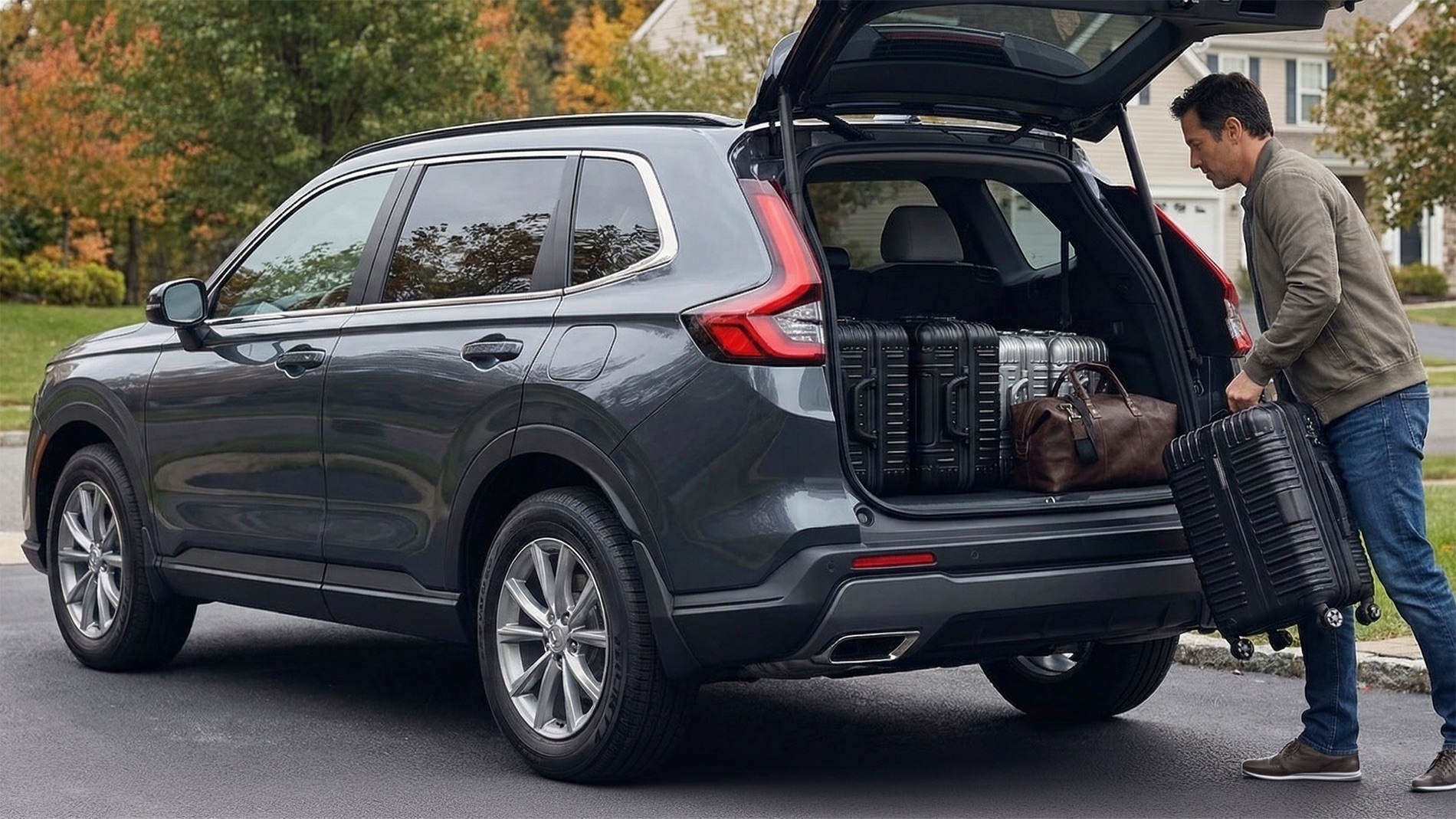
2026 Honda CR-V Cargo Space
See how much cargo space the Honda CR-V offers and how it handles everyday errands, packed schedules, and weekend plans around Orange County.
If you’re researching 2026 Honda CR-V cargo space, you’re likely trying to answer a simple question: will this actually fit your day-to-day life? Cargo space is not just about numbers. It is about how easily your vehicle handles errands, packed schedules, and the moments when you suddenly need more room than expected.
For drivers in Middletown, Warwick, Monroe, and the wider Hudson Valley, that usually means a mix of quick trips, full back seats, and the kind of routines where flexibility matters more than anything else. The CR-V is built around that reality, which is why it continues to be one of the most practical choices in its class.
In this guide, we break down the official 2026 Honda CR-V cargo dimensions using exact OEM data. You’ll find a detailed cargo space table, a real-world breakdown of how that space actually works, and a side-by-side comparison with competitors. The goal is to help you understand not just how much space you get, but how that space fits into everyday use.
Quick Answers About 2026 Honda CR-V Cargo Space ▼
How much cargo space does the 2026 Honda CR-V have?
Up to 39.3 cubic feet behind the second row in gas models and up to 76.5 cubic feet with the rear seats folded.
Does cargo space vary between gas and hybrid models?
Yes. Hybrid models offer slightly less space behind the second row, but the same maximum cargo capacity.
Is the CR-V larger than similar compact SUVs?
Yes. The CR-V provides more usable cargo space than smaller crossovers like the HR-V, Rav4, and Subaru Forester.
Is the 2026 Honda CR-V practical for everyday use?
Yes. It is designed to handle daily errands, flexible schedules, and larger cargo needs without requiring constant adjustments.
A Car & Driver Perspective
2026 Honda CR-V
10 / 10 Rating
Car & Driver Editors’ Choice
Named to Car & Driver’s 10Best Trucks & SUVs List
Car and Driver notes that the CR-V offers 39 cubic feet of cargo space behind the second row and says that is enough room for 12 carry-ons, which is two more than the Toyota RAV4 can manage.
2026 Honda CR-V Cargo Space Breakdown
Honda CR-V Cargo Space Specifications ▼
| Cargo Space |
| Category |
Measurement |
| EPA Passenger Volume |
103.5–106.0 Cu Ft |
| Cargo Volume Behind Second Row |
36.3–39.3 Cu Ft |
| Cargo Volume Behind First Row |
76.5 Cu Ft |
The 2026 Honda CR-V cargo space stays consistent in the ways most drivers actually use it, but there are a few differences worth paying attention to depending on whether you choose gas or hybrid.
Start with the everyday setup. With the rear seats up, the gas models give you 39.3 cubic feet of cargo space, while hybrid models come in at 36.3 cubic feet. That difference exists, but in real use, both setups handle the kind of week most people actually have—grocery runs, last-minute store stops, sports bags in the back, or loading things in between work and getting home. You’re not constantly folding seats down just to make the vehicle work.
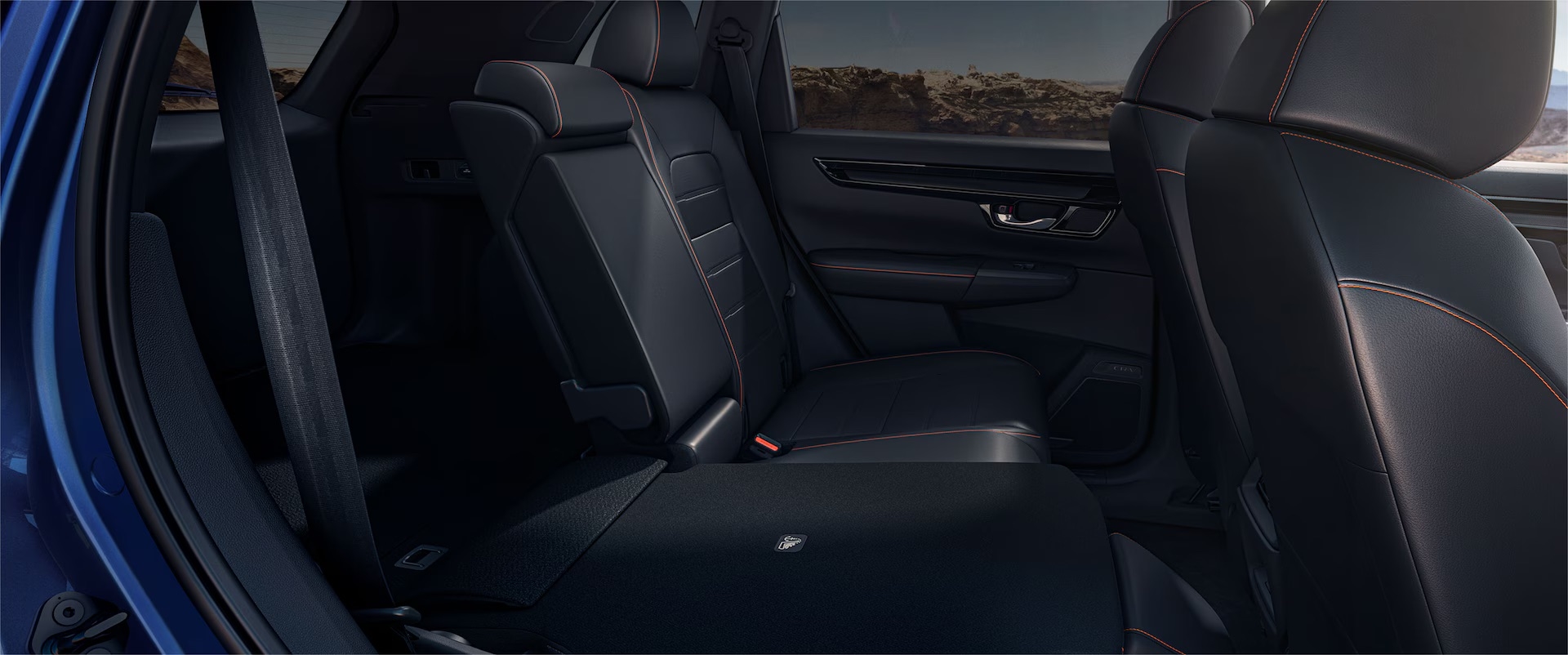
Where the CR-V really opens up is with the seats folded. Every trim gives you 76.5 cubic feet behind the first row, which is the number that matters when plans get bigger. That could mean loading up for a weekend away, making a home improvement run, or fitting in bulkier items that don’t cooperate with a smaller cargo area. There’s no trade-off here between trims—you get the same maximum usability across the lineup.
Passenger space is also consistent. The LX provides 106.0 cubic feet of passenger volume, while the rest of the lineup—gas EX, EX-L, and all hybrid trims—comes in at 103.5 cubic feet. In practice, both feel roomy for a compact SUV. People in the back seat have space to settle in, and the cabin doesn’t feel tight during longer drives or when the car is fully loaded.
The takeaway is simple: Gas models give you a slight edge in cargo space with the seats up, but every CR-V delivers the same maximum cargo flexibility and a consistently comfortable cabin. It fits the kind of driving most people actually do—short trips during the week, longer drives when needed, and everything in between—without forcing you to think about space very often.
Cargo Space Vs. Competitors ▼
| Cargo Space vs Competitors |
| Vehicle Model |
Cargo Space / Trunk Size |
Max Cargo Space / Seats Folded |
| 2026 Honda CR-V |
39.3 Cubic Feet |
76.5 Cubic Feet |
| 2026 Honda HR-V |
24.4 Cubic Feet |
55.1 Cubic Feet |
| 2026 Toyota Rav4 |
37.5 Cubic Feet |
69.8 Cubic Feet |
| 2026 Nissan Rogue |
36.5 Cubic Feet |
74.1 Cubic Feet |
| 2026 Subaru Forester |
29.6 Cubic Feet |
74.4 Cubic Feet |
This comparison puts the 2026 Honda CR-V in a strong position right away, especially when you look at how the space works during a normal week. With 39.3 cubic feet behind the second row, it gives you more usable everyday cargo room than the Toyota RAV4 and Nissan Rogue, and a noticeable step up from the Subaru Forester. That difference shows up quickly when you are loading groceries, bags, or anything that builds up over a few stops.
The gap becomes even more important when you compare it to smaller options like the Honda HR-V. The HR-V can handle lighter use, but it starts to feel limited sooner, while the CR-V keeps things easy without requiring you to think about space as often.
With the seats folded, the CR-V opens up to 76.5 cubic feet, which puts it right at the top of this group. It edges out the Rogue and Forester and stays well ahead of the RAV4, giving you more flexibility when plans get bigger or when you need to carry bulkier items. This is the space that matters when your day changes and you need your vehicle to keep up without hesitation.
The takeaway is simple. The CR-V gives you more room where you actually use it most and just as much, if not more, flexibility when you need it. It strikes a balance that works for everyday driving without falling short when your routine gets a little more demanding.
Real-World Examples ▼
| Real-World Cargo Fit |
| Cargo Setup |
What That Space Means in Daily Life |
| Behind Second Row |
Handles normal weekly use without folding seats. You can load groceries, backpacks, sports gear, and everyday items without running out of room or stacking everything tightly. |
| With The Rear Seats Folded |
Opens up for bigger plans. This setup fits larger boxes, home project supplies, moving-day items, or luggage for trips without feeling like you are pushing the limits of the vehicle. |
| Passenger Space |
Keeps the cabin comfortable while still leaving room for cargo. Passengers have space to settle in, and the vehicle does not feel tight during longer drives or busy days with a full load. |
This breakdown of real-world cargo fit shows how the 2026 Honda CR-V actually handles daily use, not just what the numbers look like on paper. The difference between gas and hybrid models exists, but it shows up more in edge cases than in normal routines.
With the rear seats up, the gas models give you 39.3 cubic feet of cargo space, which covers the kind of days where you’re loading groceries, a stroller, or a mix of bags without thinking twice about it. The hybrid models come in slightly lower at 36.3 cubic feet, but they still handle the same core routines—work bags, errands, sports gear, and everyday carry—without forcing you to adjust how you use the vehicle.
Where the CR-V becomes more flexible is when you fold the rear seats down. Every trim opens up to 76.5 cubic feet behind the first row, and that’s the space that changes what the vehicle can handle. This is where it starts to make sense for bigger plans—loading up for a weekend away, handling a larger store run, or fitting in items that don’t work in a tighter cargo area.
Passenger space follows a similar pattern. The LX offers 106.0 cubic feet of passenger volume, while the rest of the lineup sits at 103.5 cubic feet. In real use, both feel open enough for daily driving, longer stretches on the road, and carrying passengers without the cabin feeling cramped.
The overall takeaway is that the CR-V is built to handle normal life without requiring constant adjustments. The gas models give you a little more room with the seats up, but every version delivers the same full cargo flexibility when you need it, along with a cabin that stays comfortable over time.
Why the 2026 Honda CR-V Cargo Space Just Makes Sense
When you step back from the numbers, the 2026 Honda CR-V cargo space stands out for a simple reason—it makes everyday life easier. You don’t have to plan around it, work around it, or second guess whether something will fit. It’s ready for the kind of days most people actually have.
During the week, that means loading up without thinking twice. Groceries, bags, gear, and the extra things that always seem to come along all fit without turning into a puzzle. The space feels open, usable, and easy to work with, which is exactly what you want when your day is already full.
When things get bigger, the CR-V keeps up. Whether you’re packing for a weekend, tackling a home project, or just dealing with one of those days where everything ends up in the back, the cargo area expands in a way that feels natural and genuinely useful. It doesn’t feel like you’re pushing the limits of the vehicle—it feels like it was built for it.
For drivers around Middletown, that’s where the CR-V really fits. It handles the quick trips, the busy schedules, and the moments when plans change without becoming difficult to live with. It’s the kind of space you rely on without thinking about it, and that’s what makes it feel like the right choice once you start using it every day.
FAQ: 2026 Honda CR-V Cargo Space & Trunk Dimensions
This FAQ answers the most common questions about the 2026 Honda CR-V and how its cargo space works in everyday use. If you are comparing SUVs and trying to figure out what will actually fit your routine, this section focuses on the details that matter once you start using the vehicle day to day.
How much cargo space does the 2026 Honda CR-V have behind the second row? ▼
The 2026 Honda CR-V offers 39.3 cubic feet of cargo space behind the second row in gas models and 36.3 cubic feet behind the second row in hybrid models. Both setups give you strong everyday usability for groceries, bags, sports gear, and routine errands.
What is the maximum cargo space in the 2026 Honda CR-V? ▼
With the rear seats folded, every 2026 Honda CR-V trim opens up to 76.5 cubic feet of cargo space behind the first row. That gives the CR-V the flexibility to handle larger boxes, home project supplies, luggage, and bulkier loads more easily than many smaller crossovers.
Do gas and hybrid 2026 Honda CR-V models have the same cargo space? ▼
Not exactly. Gas models offer 39.3 cubic feet behind the second row, while hybrid models offer 36.3 cubic feet. The maximum cargo area with the rear seats folded stays the same across the lineup at 76.5 cubic feet.
Is the 2026 Honda CR-V big enough for family errands and everyday cargo? ▼
Yes. The 2026 Honda CR-V gives most drivers enough room for grocery runs, backpacks, sports bags, strollers, and the kinds of loose items that build up during a normal week. It works well for daily use without making you fold seats down every time you need cargo room.
How roomy is the 2026 Honda CR-V for passengers? ▼
The 2026 Honda CR-V LX offers 106.0 cubic feet of passenger volume, while EX, EX-L, Sport Hybrid, TrailSport Hybrid, and Sport-L Hybrid trims offer 103.5 cubic feet. In real use, both layouts feel roomy for a compact SUV and give passengers enough space for commuting, errands, and longer drives.
Does the 2026 Honda CR-V feel larger inside than smaller crossover competitors? ▼
Yes, especially when you compare cargo space. The CR-V gives you more usable room behind the second row and with the seats folded than many smaller crossovers, which makes it easier to adapt when the week gets busier or you need to carry larger items on short notice.
What kind of items fit in the 2026 Honda CR-V cargo area? ▼
With the rear seats up, the CR-V handles groceries, luggage, backpacks, sports gear, and most everyday cargo without trouble. With the seats folded, it becomes much more useful for larger boxes, home improvement supplies, moving-day overflow, and the kinds of bulky items that quickly fill a smaller SUV.
Where can I test drive a 2026 Honda CR-V near Middletown? ▼
You can test drive a 2026 Honda CR-V at Middletown Honda. The dealership helps drivers from Middletown, Warwick, Monroe, Newburgh, and Port Jervis compare CR-V trims, explore cargo space in person, and get a better feel for how the vehicle fits real daily use.
See the CR-V Cargo Space for Yourself at Middletown Honda
At Middletown Honda, we are proud to serve drivers from Middletown, Warwick, Monroe, and the greater Hudson Valley area. We work with people every day who are trying to figure out if a vehicle will actually fit their routine, not just look good on paper.
One of the most common questions we hear is simple: will this space really work once life gets busy? It usually comes up after someone has tried to make a smaller SUV work and run into the same issues—stacking groceries, running out of room during a normal week, or realizing too late that weekend plans require more space than expected.
That is why we take a more practical approach. We walk you through the CR-V in a way that reflects how you actually use your vehicle. Open the cargo area, fold the seats, and see how it feels with your own day in mind. It is a straightforward process, but it makes a big difference when you are trying to choose something you will live with long term.
If you are comparing your options and want to understand how the 2026 Honda CR-V cargo space actually works in real life, stop by Middletown Honda and see it for yourself.
DISCLAIMERS:
*MSRP excludes tax, title, license, registration, destination charge, and options. Dealer prices may vary.
*Cargo and passenger volume measurements are determined by Honda and based on SAE measurement standards. Actual usable cargo space may vary depending on configuration, seat position, trim level, accessories, and loading method.
*Specifications, features, and cargo capacities may vary by trim and are subject to change without notice.
*Images are for illustration purposes only. Actual vehicle features and configurations may differ.