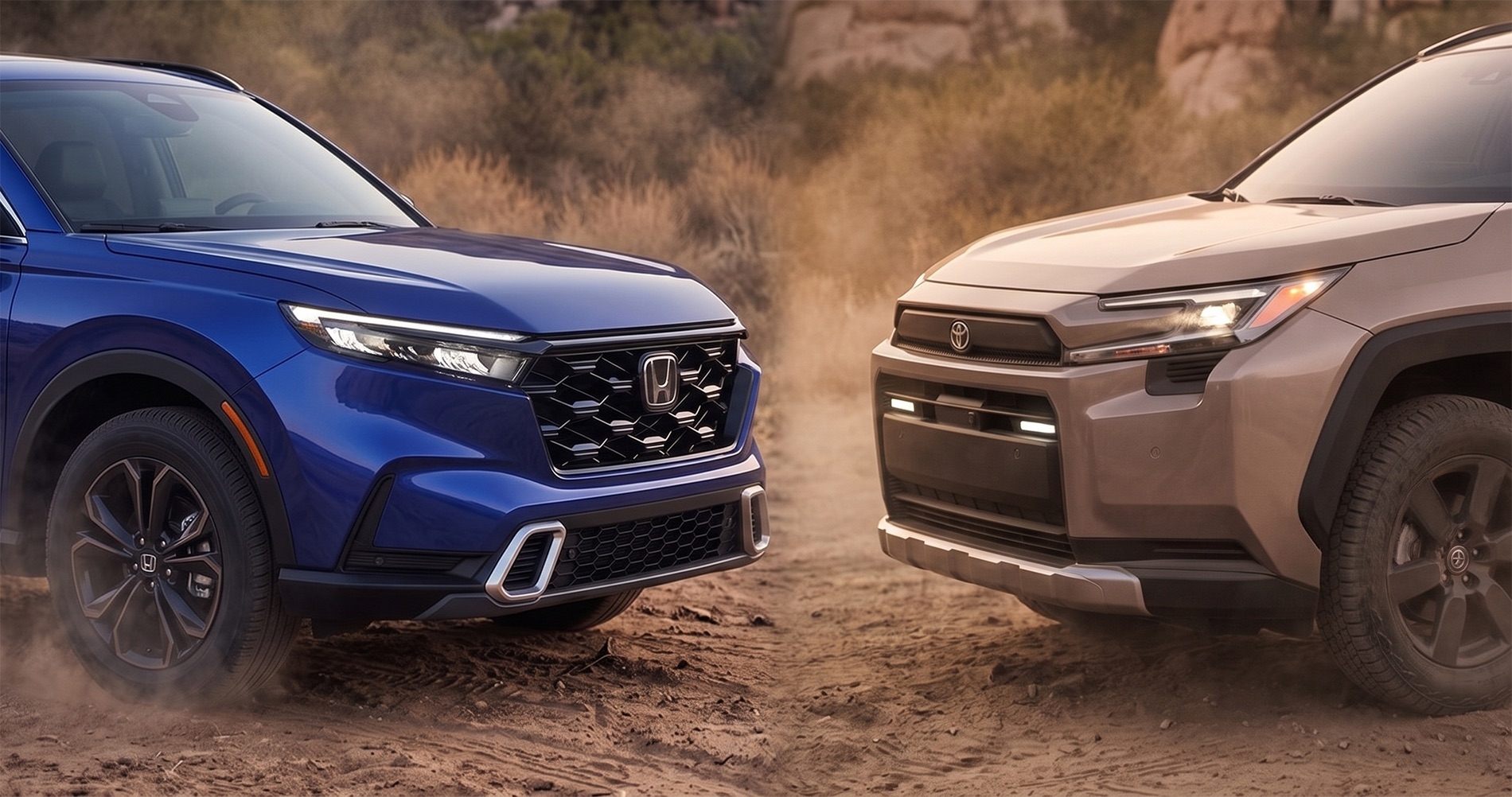
2026 Honda CR-V vs Toyota RAV4
A real-world comparison of comfort, space, efficiency, and everyday usability to help you choose the right compact SUV.
The 2026 Honda CR-V and Toyota RAV4 both check the right boxes on paper. Strong efficiency, practical sizing, and the kind of versatility most drivers are looking for in a compact SUV. But once you get past the spec sheet, they start to separate in how they actually fit into everyday life here in Orange County
A lot of the conversations we have with drivers around Middletown, Warwick, Monroe, Newburgh, and Port Jervis come back to that exact point. Hudson Valley driving isn’t just one thing. It’s quick runs through town, uneven traffic patterns, longer highway stretches, and the kind of daily use where comfort and ease start to matter more than headline numbers.
The RAV4 leans into efficiency and a more traditional SUV feel. The CR-V leans into balance. It prioritizes ride quality, interior usability, and a smoother overall experience that tends to stand out the more you drive it. That difference doesn’t always jump out immediately, but it shows up quickly once it becomes part of your routine.
This guide breaks down the 2026 Honda CR-V vs Toyota RAV4 based on how they actually live day to day. We’ll look at performance, interior space, hybrid systems, and the details that shape ownership so you can see where each one fits and which one makes more sense for how you drive.
What Does Car and Driver Say About the CR-V and RAV4?
A third-party look at how these two compact SUVs compare when tested, ranked, and lived with.
CAR AND DRIVER REVIEW
2026 Honda CR-V
10 / 10 Rating
According to Car and Driver’s CR-V review, the CR-V stands out as one of the most complete compact SUVs on the market. It earns top marks for its balance of ride comfort, interior space, and overall usability.
Editors consistently highlight how smooth and quiet it feels in daily driving, along with a cabin that feels more refined and easier to live with than most competitors. It’s not trying to win on specs alone. It wins by making everyday driving feel easier and more comfortable.
That combination has helped the CR-V earn top rankings in its class, reinforcing its reputation as a compact SUV that simply works well for a wide range of drivers over time.
CAR AND DRIVER REVIEW
2026 Toyota RAV4
8.5 / 10 Rating
In Car and Driver’s RAV4 review, the RAV4 earns strong marks for efficiency and practicality, especially in hybrid form where fuel economy becomes a major advantage.
It also brings a more traditional SUV personality, with available capability and a reputation for durability that appeals to buyers who prioritize long-term reliability and mpg over refinement.
Where it trails is overall driving feel and cabin polish. Compared to top competitors, including the CR-V, it can feel firmer, louder, and less refined in everyday use.
Ready to See the Honda CR-V for Yourself?
The CR-V stands out where it matters most in daily driving. Explore available models and find the one that fits your routine.
2026 Honda CR-V vs Toyota RAV4: Full Comparison
Price & Trim Levels ▼
| Price & Trim Levels Comparison |
| Category |
2026 Honda CR-V |
2026 Toyota RAV4 |
MSRP Range*
Base to Top Trims |
$30,920 – $42,550 |
$31,900 – $43,300 |
| Trim Levels |
LX
EX
Sport Hybrid
EX-L
TrailSport Hybrid
Sport-L Hybrid
Sport Touring Hybrid |
LE
SE
XLE Premium
Woodland
XSE
Limited |
| Drivetrain Availability |
FWD standard • Real Time AWD™ available • AWD available across the lineup |
FWD on LE, SE, XLE Premium • AWD on Woodland, XSE, Limited |
The pricing and trim structure between the 2026 Honda CR-V and 2026 Toyota RAV4 lands closer than most people expect. Both start in a similar range and climb into the low $40,000s, which means the decision here is less about raw price and more about how each lineup is organized and what you get as you move up.
The RAV4 keeps things relatively straightforward with six trims and a mix of front-wheel drive and all-wheel drive depending on configuration. It also offers distinct personalities like the Woodland and XSE, which give it a bit of variety if you’re looking for something more specific in styling or light off-road capability.
The CR-V, on the other hand, gives you a broader range of choices with a more clearly defined progression, especially once you factor in the hybrid trims. From the LX through the Sport Touring Hybrid, each step feels intentional, whether you’re prioritizing value, efficiency, or a more refined daily driving experience. That structure tends to make it easier to land on a trim that fits your routine without overbuying or skipping something important.
Another advantage shows up in drivetrain flexibility. The CR-V offers Real Time AWD™ availability across the lineup, including hybrid models, so you don’t have to move into a specific trim just to get all-weather capability. The RAV4 still delivers solid AWD options, but it ties them more closely to certain trims, which can limit flexibility depending on how you’re building your vehicle.
In the end, both lineups are competitive and well thought out. The RAV4 earns credit for its variety and recognizable trim structure, but the CR-V stands out for how easy it is to match a trim to your needs, especially if you’re considering a hybrid or want AWD without overcomplicating the decision.
Performance & Fuel Economy ▼
| Performance & Fuel Economy Comparison |
| Category |
2026 Honda CR-V |
2026 Toyota RAV4 |
| Powertrain Type |
1.5L Turbocharged 4-Cylinder Gas Engine • 2.0L Two-Motor Hybrid System |
2.5L Dynamic Force 4-Cylinder Hybrid System |
| Total Horsepower |
190 hp (Gas) • 204 hp (Hybrid) |
236 combined net hp |
| Torque |
179 lb-ft (Gas) • 247 lb-ft (Hybrid) |
170 lb-ft max electric motor torque |
| Transmission |
Continuously Variable Transmission (Gas) • Two-Motor Hybrid System |
Electronically Controlled Continuously Variable Transmission (ECVT) |
| Drivetrain |
FWD standard • AWD available |
FWD or AWD depending on trim |
| Drive Modes |
Normal • Econ • Snow (Gas) • Sport • Normal • Econ • Snow (Hybrid) |
Sport • Eco • Normal • EV • Trail • Snow |
| Fuel Economy City / Hwy / Combined |
Gas FWD: 28 / 33 / 30 MPG
Gas AWD: 27 / 31 / 29 MPG
Hybrid FWD: 43 / 36 / 40 MPG
Hybrid AWD: 40 / 34 / 37 MPG or 38 / 33 / 35 MPG |
FWD: 47 / 40 / 43 MPG
AWD: 43 / 37 / 41 MPG or 41 / 35 / 38 MPG |
This section is where the differences between the 2026 Honda CR-V and 2026 Toyota RAV4 start to feel more intentional rather than just numbers on a page. The RAV4 clearly leans into efficiency and peak output, with higher combined horsepower and strong hybrid fuel economy figures that stand out if maximizing MPG is your top priority.
The CR-V takes a slightly different approach. Instead of focusing on one standout number, it gives you flexibility depending on how you actually drive. The turbocharged gas engine handles daily commuting smoothly, while the hybrid system adds strong low-end torque that feels responsive in real-world situations like merging or stop-and-go traffic. That balance tends to feel more natural over time, especially in mixed driving conditions.
Fuel economy remains competitive across the board. The RAV4 earns credit for leading in pure efficiency, particularly in front-wheel drive hybrid form. At the same time, the CR-V stays right in the mix while offering a more consistent experience across different drivetrains, including hybrid all-wheel drive models that don’t feel like a compromise.
Another key difference comes down to how these systems behave day to day. The CR-V’s hybrid setup delivers power in a way that feels smooth and predictable, while the RAV4 introduces more drive modes and variability depending on trim. Some drivers will appreciate that added control, but others may prefer the CR-V’s simpler, more cohesive feel.
Both SUVs perform well in this category, but they serve slightly different priorities. The RAV4 stands out for efficiency and peak output, while the CR-V focuses on balance, drivability, and consistency—qualities that tend to matter more the longer you own and drive the vehicle.
Exterior Dimensions ▼
| Exterior Dimensions Comparison |
| Category |
2026 Honda CR-V |
2026 Toyota RAV4 |
| Overall Length |
184.8 In |
181.0 In – 182.0 In |
| Overall Width |
73.5 In |
73.0 In – 74.0 In |
| Overall Height |
63.4 In – 64.1 In |
66.5 In |
| Wheelbase |
106.3 In |
105.9 In |
| Ground Clearance |
7.8 In – 8.2 In |
8.1 In – 8.5 In |
| Turning Diameter |
37.0 Ft – 37.3 Ft |
36.0 Ft |
From a size and stance perspective, the 2026 Honda CR-V and 2026 Toyota RAV4 land in a very similar space, but the details show how each one approaches everyday usability a little differently. The CR-V comes in slightly longer overall, which translates into a bit more usable cabin space and cargo flexibility once you’re living with it day to day. It’s not something you notice on a spec sheet alone, but it shows up when you’re loading gear or giving passengers more room to stretch out.
The RAV4, meanwhile, leans into a taller and slightly more upright design. That added height and ground clearance give it a more rugged look and a bit of an advantage if you’re thinking about light trails or rougher roads. It also turns a little tighter, which can help in tighter parking situations or navigating crowded lots.
Where the CR-V stands out is in overall balance. The longer wheelbase and wider footprint give it a more planted feel on the road, which tends to translate into a smoother, more stable driving experience, especially at highway speeds or on longer trips. It feels composed without asking you to think about it.
Both SUVs fit easily into daily driving, parking, and commuting situations, so this isn’t a case where one clearly outclasses the other. The RAV4 earns credit for its slightly more rugged proportions, while the CR-V makes a strong case for comfort, stability, and space—qualities that tend to matter more the more time you spend behind the wheel.
Interior Dimensions ▼
| Interior Dimensions Comparison |
| Category |
2026 Honda CR-V |
2026 Toyota RAV4 |
| Seating Capacity |
5 |
5 |
| Passenger Volume |
103.5–106.0 Cu Ft |
98.9 Cu Ft |
| Headroom (Front/Rear) |
38.2–40.0 / 38.2 In |
36.7 / 36.7 In |
| Legroom (Front/Rear) |
41.3 / 41.0 In |
41.0 / 37.8 In |
| Shoulder Room (Front/Rear) |
57.9 / 55.9 In |
57.0 / 56.4 In |
| Hip Room (Front/Rear) |
55.6 / 52.6 In |
55.3 / 49.6 In |
| Cargo Volume (Rear Cargo Area) |
34.7–39.3 Cu Ft |
36.6–37.8 Cu Ft |
This is where the 2026 Honda CR-V starts to separate itself in a way that you’ll actually notice once you’re living with it. On paper, both SUVs offer similar layouts with seating for five, but the CR-V consistently provides more overall passenger space, and that shows up quickly when you have adults in the back seat or a full cabin on longer drives.
The biggest difference comes from rear legroom. The CR-V gives rear passengers over 41 inches, which is a meaningful jump compared to the RAV4. That extra space changes how the vehicle feels day to day, especially if you regularly carry passengers or have a car seat behind the driver. It simply feels less cramped and more accommodating.
The RAV4 still holds its own in a few areas. Shoulder room is very close, and cargo space behind the rear seats stays competitive across most trims. For buyers focused strictly on trunk capacity, the difference won’t feel dramatic in everyday use.
Where the CR-V pulls ahead is in how everything comes together. The added passenger volume, combined with strong front and rear proportions, creates a cabin that feels open and comfortable without needing to think about it. It’s the kind of space that works just as well for quick errands as it does for longer trips.
Both SUVs deliver practical interiors, but the CR-V’s extra room and more balanced layout tend to make a bigger impact over time, especially if comfort and passenger space are high on your list.
Interior & Technology Features ▼
| Interior & Technology Comparison |
| Feature |
2026 Honda CR-V |
2026 Toyota RAV4 |
| Touchscreen Size |
9-In |
10.5-In or 12.9-In |
| Digital Driver Display |
7-In or 10.2-In |
12.3-In |
| Wireless Apple CarPlay / Android Auto |
✔ |
✔ |
| Premium Audio System |
✔ (Up to 12 speakers) |
✔ (Up to 9 speakers) |
| Wireless Phone Charging |
✔ |
✔ |
| USB-C Charging (Front & Rear) |
✔ |
✔ |
| Household Power Outlet |
— |
✔ |
| Dual-Zone Climate Control |
✔ |
✔ |
| Rear Air Vents |
✔ |
✔ |
| Heated Front Seats |
✔ |
✔ |
| Ventilated Front Seats |
— |
✔ |
| Heated Rear Seats |
— |
✔ |
| Power Driver Seat |
✔ |
✔ |
| Power Passenger Seat |
✔ |
✔ |
| Moonroof / Glass Roof |
✔ (Moonroof) |
✔ (Panoramic Available) |
| Hands-Free Power Liftgate |
✔ |
✔ |
| Remote Engine Start |
✔ |
✔ |
This section comes down to how you actually interact with the vehicle every day. The 2026 Toyota RAV4 makes a strong first impression with larger screens and a more tech-forward presentation. If having the biggest display and a more feature-heavy setup matters to you, the RAV4 clearly checks that box and earns credit here.
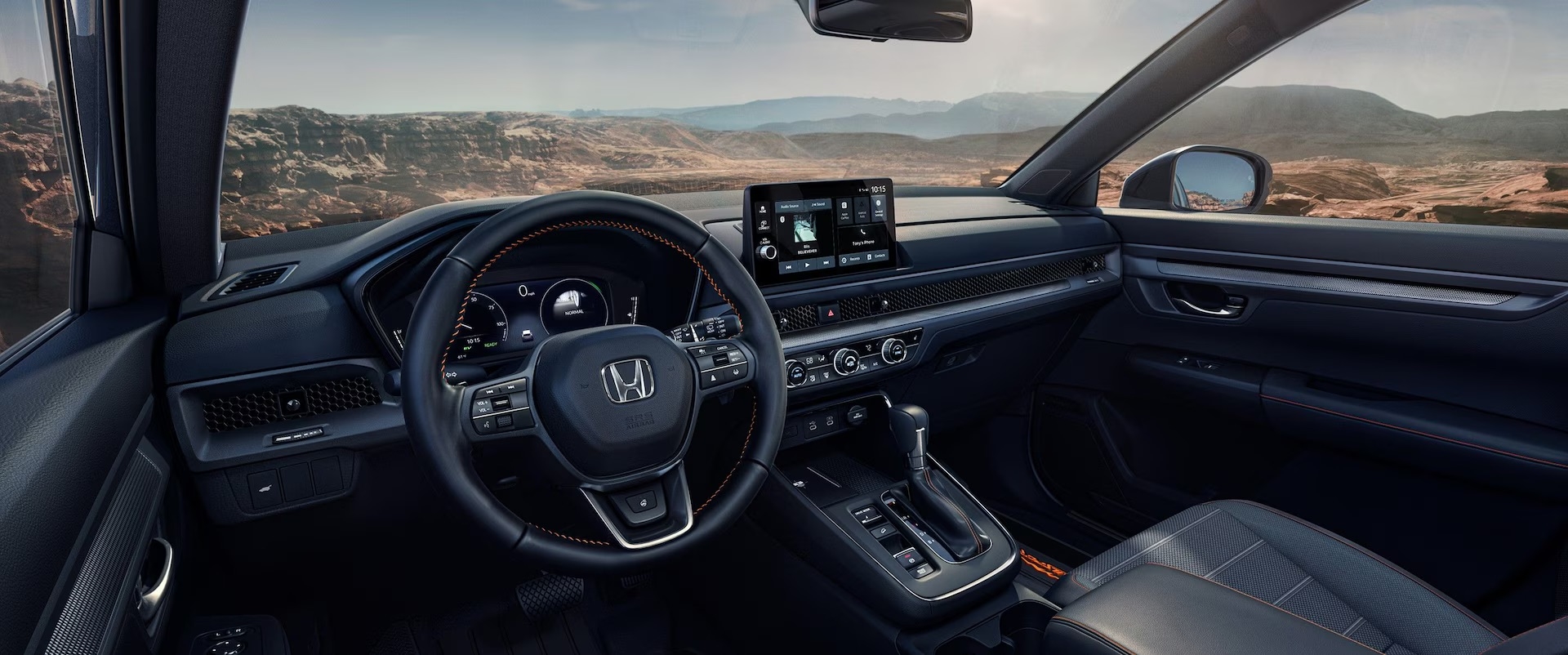
The 2026 Honda CR-V takes a more balanced approach. Instead of chasing size, it focuses on usability. The touchscreen, digital display, and controls feel straightforward and easy to operate without distraction. That simplicity becomes a real advantage over time, especially in daily driving where you’re adjusting settings quickly rather than exploring menus.
Both SUVs cover the essentials well. Wireless Apple CarPlay and Android Auto, wireless charging, USB-C ports, and dual-zone climate control all come standard, so you’re not giving anything up in core functionality regardless of which direction you go.
The RAV4 adds a few extra touches like ventilated front seats, heated rear seats, and an available household power outlet, which can be useful depending on your lifestyle. Those features stand out if you’re specifically looking for added convenience or occasional utility beyond daily driving.
Where the CR-V stands out is in how everything works together. The layout feels cohesive, the controls are easy to reach, and the overall experience stays consistent across trims. It’s less about having more features and more about how naturally those features fit into your routine, which tends to matter more the longer you own the vehicle.
Safety & Driver Assistance ▼
| Safety & Driver Assistance Comparison |
| Feature |
2026 Honda CR-V |
2026 Toyota RAV4 |
| Full Safety Suite |
Honda Sensing® |
Toyota Safety Sense™ 4.0 |
| Automatic Emergency Braking |
✔ |
✔ |
| Adaptive Cruise Control |
✔ |
✔ |
| Lane Keeping Assistance |
✔ |
✔ |
| Traffic Jam Assist |
✔ |
Available |
| Blind Spot Monitoring |
✔ |
✔ |
| Rear Cross-Traffic Alert |
✔ |
✔ |
| Parking Assistance |
✔ |
✔ |
| 360° Camera |
- |
✔ |
| Rearview Camera |
✔ |
✔ |
| Automatic High Beams |
✔ |
✔ |
| Airbag Coverage |
✔ Multi-angle airbag system |
✔ 8-airbag system |
Safety is one area where both the 2026 Honda CR-V and 2026 Toyota RAV4 come in strong, and most drivers will find that both SUVs cover the essentials without compromise. Each model includes a full suite of driver-assist features as standard, with automatic emergency braking, adaptive cruise control, lane keeping assistance, and blind spot monitoring all built in from the start. In day-to-day driving, that means both vehicles feel confident and well-equipped right away.
The RAV4 does offer a few additional features depending on trim, including an available 360-degree camera and more advanced parking assistance options. Those can be helpful in tighter parking situations or for drivers who want extra visibility when maneuvering.
The CR-V takes a slightly different approach by focusing on consistency across the lineup. One standout detail is Traffic Jam Assist being included as standard, rather than tied to higher trims. That kind of feature tends to make a bigger difference in real-world driving, especially in stop-and-go traffic where you’ll actually use it regularly.
Overall, the two systems are very comparable in capability, even if the naming and packaging can look different on paper. The RAV4 earns credit for offering a few extra features at the top end, while the CR-V stands out for delivering a more consistent and accessible safety experience across its lineup. For most drivers, that simplicity and availability make it easier to get the features you’ll actually use every day without overthinking trim levels.
Choosing Between the 2026 Honda CR-V and Toyota RAV4
When you step back and look at the full picture, the 2026 Honda CR-V and Toyota RAV4 both deliver exactly what most drivers expect from a compact SUV. Strong efficiency, modern technology, and practical space all come standard. The difference shows up in how those strengths translate into everyday use.
The RAV4 earns credit where it should. It offers excellent hybrid fuel economy, a slightly more rugged design, and a few extra features at the top trims that appeal to drivers looking for added capability or a more tech-forward feel. If those specific priorities are at the top of your list, it’s easy to see the appeal.
The CR-V takes a more balanced approach, and that’s where it starts to stand out. More interior space, especially in the rear seats, makes a noticeable difference for passengers. The driving experience feels smooth and predictable, and the layout inside the cabin is easy to use without distractions. Over time, those details tend to matter more than a single standout spec.
We see that play out all the time with drivers coming from areas like Warwick or Monroe who spend a mix of time on local roads and longer highway drives. The CR-V tends to feel more comfortable and consistent in those situations, especially when you’re dealing with daily traffic, weekend trips, or changing weather conditions.
It also makes the decision process simpler. With a well-structured lineup and AWD availability across more trims, including hybrids, it’s easier to find a version of the CR-V that fits your routine without having to navigate around limitations.
Both SUVs are strong choices, but the CR-V consistently delivers the kind of comfort, usability, and everyday practicality that most drivers end up appreciating the longer they own it. It’s the option that fits into your life without asking you to adjust to it, and that’s what makes it the stronger overall pick for many buyers.
Ready to See the Honda CR-V for Yourself?
The CR-V stands out where it matters most in daily driving. Explore available models and find the one that fits your routine.
FAQ: 2026 Honda CR-V vs Toyota RAV4
Which is better: the 2026 Honda CR-V or Toyota RAV4? ▼
The CR-V stands out for interior space, smooth driving feel, and a more balanced overall experience. The RAV4 offers strong efficiency and more rugged styling. The better choice depends on whether you prioritize comfort and usability or maximum MPG and a more aggressive design.
Which SUV has better fuel economy? ▼
The RAV4 hybrid leads slightly in peak MPG numbers, especially in front-wheel drive form. The CR-V hybrid stays very competitive while offering strong efficiency across both FWD and AWD configurations.
Does the Honda CR-V have more interior space than the RAV4? ▼
Yes. The CR-V offers more overall passenger volume and significantly more rear legroom, which makes a noticeable difference for passengers and everyday comfort.
Which SUV is more comfortable for daily driving? ▼
The CR-V focuses more on ride comfort, cabin space, and smooth power delivery. That combination tends to feel more relaxed and consistent during commuting, errands, and longer drives.
Does the RAV4 have more technology features? ▼
The RAV4 offers larger available screens and a few extra features like ventilated seats and a household power outlet. The CR-V focuses more on intuitive design and ease of use rather than adding extra complexity.
Which SUV has better AWD capability? ▼
Both offer capable all-wheel drive systems. The RAV4 leans slightly more rugged with trims like Woodland, while the CR-V offers AWD availability across more trims, including hybrids, making it easier to configure.
Which SUV has more cargo space? ▼
Both are very close, but the CR-V offers a wider range of cargo space depending on trim and slightly more maximum usable room in many configurations.
Is the Honda CR-V worth it over the Toyota RAV4? ▼
For many drivers, yes. The CR-V offers a more spacious interior, smoother driving experience, and a simpler trim structure that makes it easier to choose the right configuration for daily life.
Where can I test drive a Honda CR-V near Middletown? ▼
Middletown Honda serving Middletown, Warwick, Monroe, Newburgh, and Port Jervis.
Why Drivers Choose Middletown Honda
Choosing between the 2026 Honda CR-V and Toyota RAV4 comes down to how you actually plan to use your vehicle, and that’s where working with the right team makes a difference. We spend time helping drivers sort through those real decisions every day, whether it’s comparing hybrid trims, figuring out the right AWD setup, or narrowing down what actually matters once you’re behind the wheel.
At Middletown Honda, we focus on making that process straightforward. You can see the CR-V lineup in person, compare trims side by side, and get a clear sense of how each one fits your routine without feeling rushed or pushed in a certain direction. That kind of hands-on experience tends to make the decision much easier.
We’re proud to serve drivers throughout Middletown, Warwick, Monroe, Newburgh, Port Jervis, and the surrounding area. Many of our customers come in with similar needs, from daily commuting and school drop-offs to weekend drives and longer trips, so we understand how these vehicles actually get used in Orange County.
If you’re deciding between the CR-V and RAV4, the best next step is to spend some time with the CR-V in person. Once you see how it drives and how the space feels day to day, the differences tend to become clear in a way that goes beyond the specs.
DISCLAIMERS:
*MSRP does not include destination and handling charges, taxes, title, registration fees, or dealer-installed options. Actual dealer price will vary.
*Fuel economy figures are EPA estimates. Actual mileage will vary based on driving conditions, driving habits, vehicle condition, and other factors.
*Horsepower and torque figures are based on manufacturer testing and may vary depending on configuration, fuel quality, and environmental conditions.
*Hybrid system output is a combined estimate of engine and electric motor performance and may not reflect peak simultaneous output.
*Interior and cargo dimensions are based on manufacturer measurements and may vary by trim level and configuration.
*Exterior dimensions may vary slightly depending on trim, wheels, and equipment.
*Features and technology availability may vary by trim level and may require additional packages or options.
*Safety features are designed to assist the driver and do not replace safe driving practices. Driver-assist systems have limitations and may not detect all conditions.
*All-wheel drive systems vary by model and trim. Performance may vary based on road conditions, weather, and driving behavior.