How to Winterize Your Car: A Complete Cold-Weather Checklist
Get your vehicle ready for winter driving across the Hudson Valley with a practical checklist built for freezing mornings, snow, and everyday conditions in Orange County.
Winter has a special talent for turning “my car has been fine” into “why won’t it start.”
Cold temperatures hit your battery, tire pressure, fluids, visibility, and traction all at once — and the smallest weak link can ruin your morning (or your whole weekend).
This guide walks you through how to winterize your car with a simple, step-by-step checklist you can knock out in an afternoon.
You’ll also get a car winterization kit breakdown so you’re prepared for the stuff that happens even when you did everything right.
Why Winterizing Your Car Matters
Cold weather changes how your car operates, often in ways that aren’t obvious until something goes wrong. Winterizing ahead of time helps prevent the most common cold-weather issues, including:
- Battery failure: Cold temperatures reduce battery output, which is why weak or aging batteries often fail during winter starts.
- Drops in tire pressure: As temperatures fall, tire pressure naturally decreases, affecting traction, handling, and braking performance.
- Fluids freezing or thickening: Coolant, washer fluid, and engine oil that perform fine in warm weather can struggle or freeze in colder conditions.
- Reduced visibility: Snow, ice, and road spray quickly overwhelm worn wiper blades and inadequate washer fluid, making it harder to see clearly.
Addressing these areas before cold weather hits reduces avoidable breakdowns and helps your car stay reliable when conditions are at their worst.
How to Winterize a Car: Step-by-Step Checklist
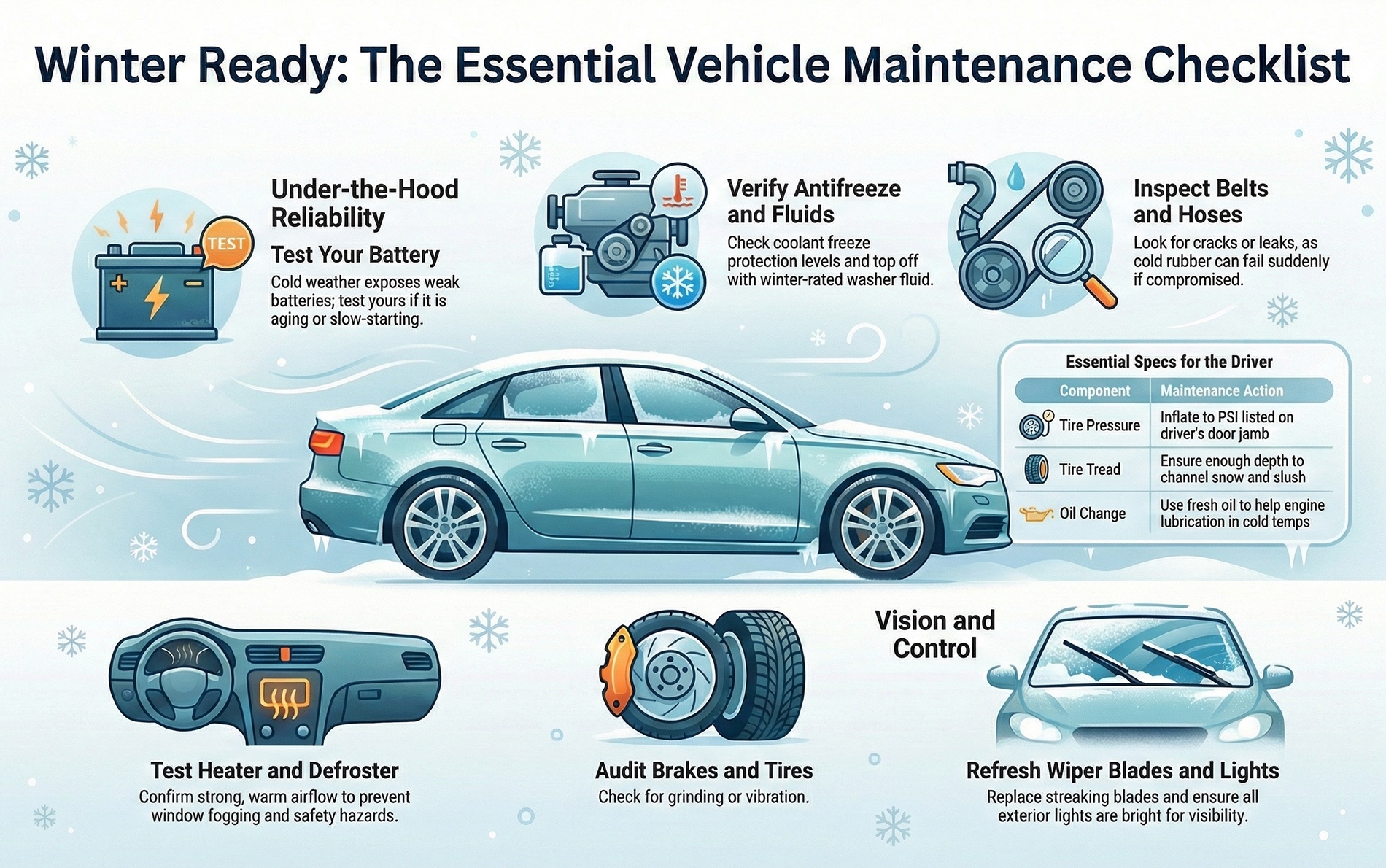
If you want a straightforward winterize car checklist, this is it. Work top to bottom and you’ll cover the same major categories you’d see in most professional inspections — without turning this into a three-week project.
| How to Winterize a Car: Step-by-Step Checklist | |
|---|---|
| Task | What to Do |
| Test Your Battery | If your battery is older or slow to start in the morning, get it tested. Cold weather exposes weak batteries fast. |
| Check Tire Pressure | Pressure drops as temperatures fall. Inflate tires to the pressure listed on the driver’s door jamb, not the tire sidewall. |
| Inspect Tire Tread | Make sure tread depth is sufficient to channel snow and slush. Low tread increases stopping distances and reduces control. |
| Confirm Coolant / Antifreeze Protection | Verify coolant level and freeze protection range. Incorrect mixtures can lead to freezing or overheating. |
| Top Off Windshield Washer Fluid | Use winter-rated washer fluid to prevent freezing. You’ll use more than expected during snow and road spray. |
| Replace Wiper Blades | If wipers streak, chatter, or skip, replace them. Clear visibility is critical in winter driving conditions. |
| Check Lights | Ensure headlights, brake lights, and turn signals are bright and fully functional for reduced winter visibility. |
| Inspect Brakes | If you notice grinding, vibration, or longer stopping distances, have brakes inspected before conditions worsen. |
| Test Heater and Defroster | Confirm strong airflow and warm air output. Weak defrosters can quickly become a safety concern. |
| Check Belts and Hoses | Look for cracks, fraying, bulges, or leaks. Cold temperatures can cause already-worn rubber to fail suddenly. |
| Consider an Oil Change if Due | Fresh oil improves cold starts and lubrication, especially when temperatures drop. |
| Build a Car Winterization Kit | Stock essentials ahead of time. A small kit can prevent a minor issue from becoming a major inconvenience. |
Quick reality check: You don’t need to do every optional upgrade. You do need your car to start, stop, see, and stay stable. That’s the entire job.
How Cold Weather Affects Your Car
Winter doesn’t usually cause problems all at once — it exposes weak points that already exist. Tires lose pressure as temperatures drop, reducing grip and braking confidence. Batteries that seemed fine in warmer months suddenly struggle to deliver enough power for cold starts. Fluids that move easily in summer can thicken or freeze, putting extra strain on key systems.
Visibility issues tend to compound these problems. Road spray, snow, and ice quickly overwhelm worn wipers, weak defrosters, and dim lighting, often at the same time traction is reduced. That combination is what turns minor maintenance oversights into stressful winter drives.
The checklist above is designed to address these cold-weather pressure points directly. When tires, battery, fluids, and visibility are all handled in advance, winter driving becomes far more predictable — even when conditions aren’t.
Car Winterization Kit: What to Keep in Your Vehicle
A car winterization kit is less about extreme scenarios and more about everyday winter realities. These are the items that help you deal with common cold-weather problems quickly, without turning a small inconvenience into a bigger issue.
Basic Car Winterization Kit
- Ice scraper and snow brush
- Small shovel (collapsible if possible)
- Jumper cables or a portable jump starter
- Flashlight or headlamp (plus spare batteries)
- Winter-rated windshield washer fluid
- Gloves you can actually work in
- Microfiber cloths for glass and mirrors
Emergency Winter Car Kit
- Warm blanket or sleeping bag
- Hat, warm socks, and an extra layer
- Phone charging cable and a power bank
- Water and shelf-stable snacks
- First aid kit
- Traction aid (sand, cat litter, or traction mats)
- Reflective triangles or road flares, where legal
If you only prioritize one item, make sure you have a reliable way to restart a dead battery. Cold weather is especially hard on batteries, and it’s one of the most common reasons winter drives don’t go as planned.
Protecting Your Car From Winter Damage
Winter doesn’t just increase the risk of breakdowns — it quietly wears your car down over time.
Road salt, slush, sand, and grime cling to painted surfaces and work their way into seams and crevices, accelerating corrosion if they’re left to build up.That damage often shows up long after winter is over, when rust, sticking doors, or worn components become hard to ignore.
Washing your car more frequently during winter, especially after storms or on treated roads, helps remove corrosive residue before it settles in.
The undercarriage deserves special attention, since that’s where buildup is most aggressive. Cleaning and lightly protecting door seals can prevent freezing and sticking, while keeping snow and moisture out of the cabin — with proper floor mats and quick shake-offs — helps reduce interior wear and odors.
When to Winterize Your Car
The best time to winterize your car is before the first major temperature drop — not after your first bad morning start. If overnight lows are consistently near freezing, it’s time.
Even if winter arrives late, doing your checklist early gives you time to replace worn items before they become an emergency.
Common Winterization Mistakes to Avoid
- Waiting until the first storm to check tire tread and pressure.
- Assuming a “fine” battery will keep being fine in the cold.
- Using summer washer fluid that freezes when you need it most.
- Ignoring wipers until you can’t see through road spray.
- Skipping an emergency kit because you “don’t drive that far.”
DIY vs Mechanic: What You Can Do Yourself
| DIY vs Mechanic Winter Prep | |
|---|---|
| Easy DIY Tasks | Worth Having a Shop Inspect |
| Check and inflate tire pressure | Battery load test, especially if the battery is older |
| Top off winter-rated windshield washer fluid | Brake inspection if you notice noise or vibration |
| Replace worn or streaking wiper blades | Coolant testing to confirm freeze protection |
| Check headlights, brake lights, and turn signals | Tire alignment if the car pulls or tires wear unevenly |
| Build or restock your car winterization kit | General winter inspection if maintenance is overdue |
FAQ: Winterizing Your Car for Cold Weather
This FAQ answers the most common questions drivers have about how to winterize your car, from below-freezing prep to winter tires and emergency kits. Use it to double-check your winterize car checklist and avoid the most common cold-weather problems.