Middletown Honda Winter Tire Guide
Snow Tires vs. All-Season Tires: Do Hudson Valley Drivers Need Winter Tires?
Snow-covered back roads, icy intersections, and freezing morning commutes put your tires to the test. The right set gives your Honda more grip where winter driving demands it most.
At Middletown Honda, we recommend tires based on the conditions you actually encounter. That means knowing when all-seasons are enough, when dedicated winter tires are worth the investment, and whether all-weather tires offer the balance you want.
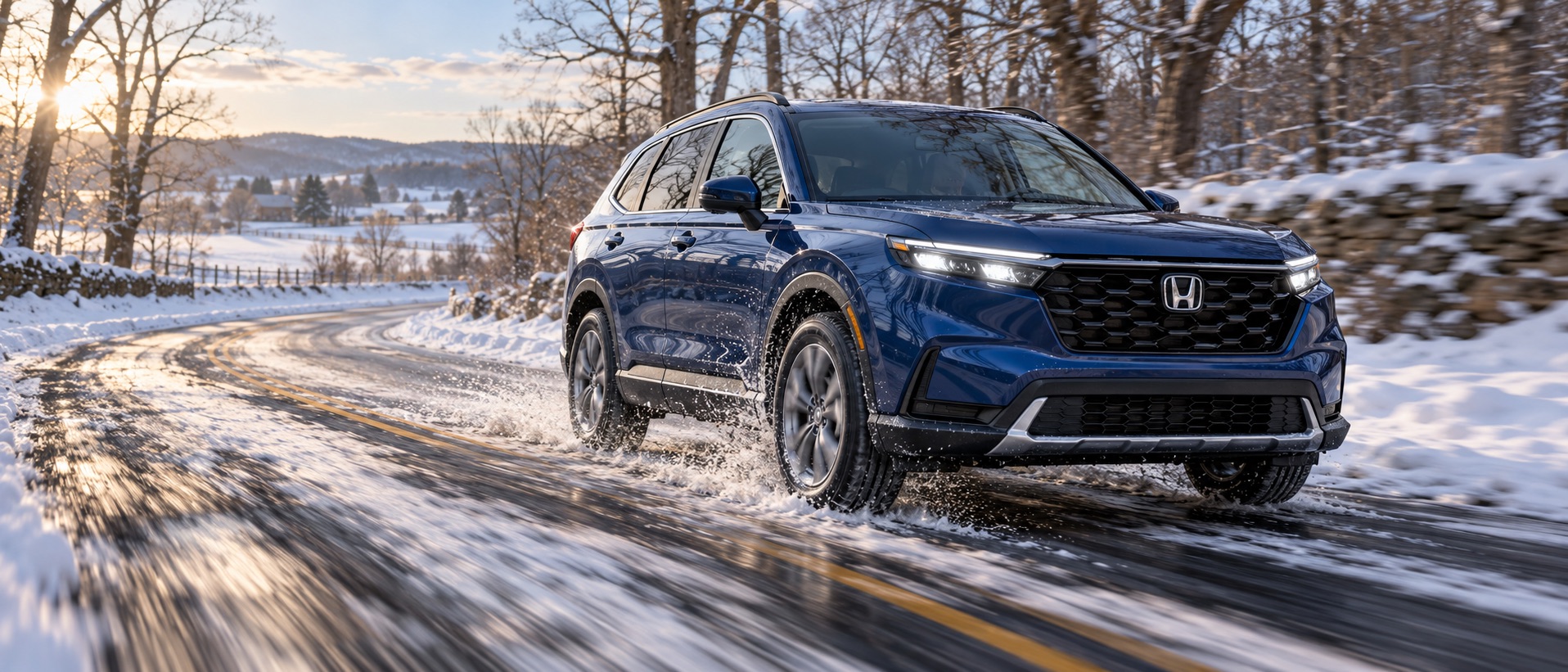
Quick Answer: Do You Need Winter Tires in the Hudson Valley?
If you regularly drive through snow, ice, and freezing temperatures, winter tires are worth it. They provide better cold-weather traction, braking, and steering control than conventional all-season tires. If you primarily drive on cleared roads and can avoid winter storms, quality all-season tires remain a practical year-round choice.
The Comparison
Winter Tires vs. All-Season Tires: What Actually Changes?
All-season tires balance year-round handling, wet-weather grip, tread life, and moderate snow capability. Winter tires prioritize traction in cold, slippery conditions. That difference affects much more than getting moving from a stop.
| Driving Condition | All-Season Tires | Winter Tires |
|---|---|---|
| Cold, Dry Pavement | Performance depends on the tire compound and model | Rubber engineered to maintain traction in low temperatures |
| Light Snow | Suitable with adequate tread and appropriate design | Stronger traction during acceleration, braking, and turns |
| Packed Snow and Ice | More limited available grip | Better suited to severe conditions, although ice remains hazardous |
| Warm-Weather Driving | Designed for year-round operation | Not intended for sustained warm-weather use |
| Ownership | One tire set throughout the year | Seasonal changeovers and storage |
Performance varies by individual tire model, tread condition, vehicle, temperature, and road surface.
Find Your Fit
Which Tire Type Fits Your Winter Driving?
Your driving schedule matters as much as your Honda. An early commute along I-84 before the plows finish clearing the road calls for a different tire choice than occasional errands on maintained streets.
For Frequent Winter Travel
Winter Tires
Our recommendation when snow, ice, and freezing temperatures are part of your regular commute.
Best suited to early departures, rural roads, hills, and essential travel during winter storms.
For Year-Round Snow Capability
All-Weather Tires
A middle ground when you want stronger snow capability and one set throughout the year.
Look for an appropriate Three-Peak Mountain Snowflake-rated model and compare its actual test results.
For Everyday Versatility
All-Season Tires
A practical choice for cleared roads, lighter winter travel, and flexible schedules.
Choose a well-tested model with sufficient tread and limit driving when conditions exceed its traction capability.
At Middletown Honda, we review vehicle compatibility, current tire condition, and the winter conditions you need your tires to handle before discussing replacement options.
The Technology
What Makes a Winter Tire Different?
Winter traction starts where the rubber meets the road. Dedicated winter tires combine a cold-weather compound with a tread pattern developed for snowy and slippery surfaces.
The rubber remains more flexible at low temperatures, helping the tread maintain contact with pavement. Specialized grooves and small cuts called sipes create additional gripping edges, while tread channels manage snow and slush.
Those differences become especially important when you're braking before an intersection, steering through a snowy curve, or moving uphill on a slippery road.
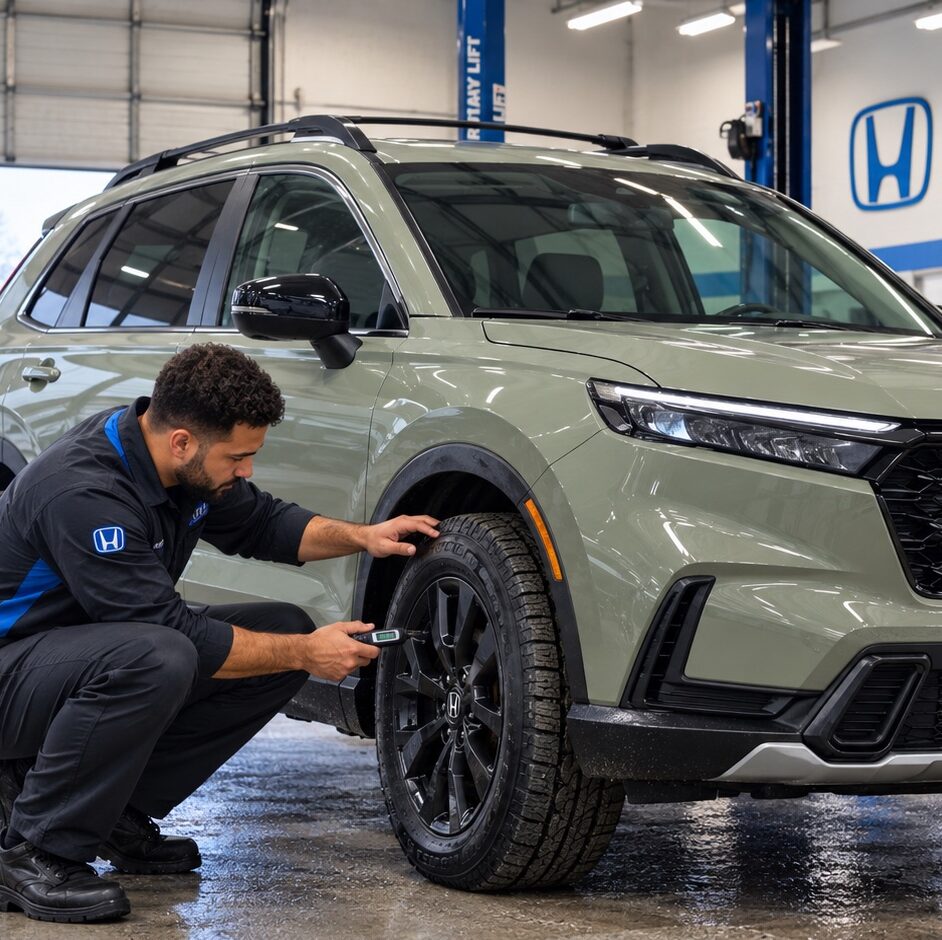
Our service team also looks at tread depth, wear patterns, and the tire's age. A tire with the right winter design still needs enough usable tread and sound construction to perform as intended.
AWD and Winter Traction
Does AWD Replace Winter Tires? No.
Honda Real Time AWD on equipped models manages driving power to improve traction during acceleration. That matters when pulling away on snow or climbing a slippery hill.
But AWD doesn't create extra grip when you're braking or turning. The tires still determine how much traction is available between your Honda and the road.
The Important Distinction
AWD Helps You Get Moving. Winter Tires Help You Stop and Turn.
A front-wheel-drive Honda on quality winter tires can outperform an AWD vehicle on conventional all-seasons in certain snowy braking and cornering conditions. The specific tires, vehicle, and surface determine the result.
Know the Markings
What Does the Three-Peak Mountain Snowflake Symbol Mean?
The Three-Peak Mountain Snowflake (3PMSF) symbol identifies tires that meet an industry-defined severe-snow traction performance requirement. It appears on dedicated winter tires and certain all-weather, all-season, and all-terrain models.
3PMSF: Tested Snow Traction
The tire passed a specified snow traction test. The symbol doesn't guarantee equal performance on ice, wet pavement, or every winter surface.
M+S: A Different Designation
A Mud and Snow marking alone doesn't establish that a tire meets the same severe-snow performance qualification.
We recommend comparing individual tire-model testing and checking proper fitment for your Honda rather than relying on a single sidewall marking.
Ownership Planning
When Should You Change Tires — and Is a Second Set Worth It?
Plan your seasonal changeover before the first major winter storm. Temperatures approaching the 45°F range are a useful reminder to review your tires, although that isn't a universal traction cutoff for every tire model.
Fall: Install Your Winter Set
Inspect the tires and schedule installation before freezing mornings become routine. Address damaged tires or fitment questions before snow arrives.
Spring: Switch Back
When consistently warmer weather returns and freezing conditions are no longer expected, reinstall your appropriate all-season or summer set.
The Cost of a Second Tire Set
Winter tires mean another purchase, seasonal installation, and storage. Alternating sets also spreads mileage-related tread wear between them, though tire age, storage conditions, and driving habits still affect lifespan.
For regular travel on snow and ice, the added traction is the main reason to invest. If you can avoid severe conditions, the convenience and cost of one well-chosen all-season or all-weather set deserve consideration.
Before the First Snow
Is Your Current Tire Set Ready for Winter?
Even the right tire type loses effectiveness when it's worn, damaged, or improperly inflated. We inspect the condition of your existing tires before determining whether maintenance or replacement is appropriate.
Tread Depth and Wear
Snow traction declines as tread wears. A tire can still meet minimum legal tread depth while offering reduced winter performance. Uneven wear also deserves inspection.
Cold Tire Pressure
Pressure drops as temperatures fall. Check your tires cold and follow the pressure listed on your Honda's driver-side doorjamb label rather than the sidewall maximum.
Age and Damage
Cracks, cuts, bulges, punctures, and age-related deterioration matter even when a stored set still has substantial tread remaining.
Fitment and Matching Tires
Use four matching winter tires and verify approved size, load and speed requirements, wheel compatibility, and tire-pressure monitoring specifications.
Find Out Where Your Tires Stand Before Winter.
Our service team checks tread condition, tire pressure, wear patterns, and fitment, then explains what needs attention. From rotation and alignment to replacement, we connect our recommendation to what we find on your Honda.
FAQ: Snow Tires vs. All-Season Tires
Straight answers about winter traction, AWD, tire changes, and preparing your Honda for Hudson Valley roads.
Get Your Honda Ready for Hudson Valley Winter Roads
Our Middletown Honda service team is ready to inspect your tires, review your vehicle's requirements, and explain your maintenance or replacement options before winter driving puts them to the test.
Middletown Honda | 520 Route 211 E, Middletown, NY 10941
Tire performance depends on manufacturer, model, compound, tread design, tread depth, inflation pressure, vehicle configuration, temperature, and road conditions.
Winter tires improve traction but do not eliminate the risks of snow or ice. Always adjust speed and following distance to conditions.
Follow your Honda owner's manual and vehicle tire placard for approved dimensions, load and speed requirements, cold inflation pressures, and wheel compatibility.
Confirm tire-pressure monitoring requirements and other applicable specifications before changing wheels or tire sizes. Tire availability, pricing, and service eligibility are subject to confirmation.