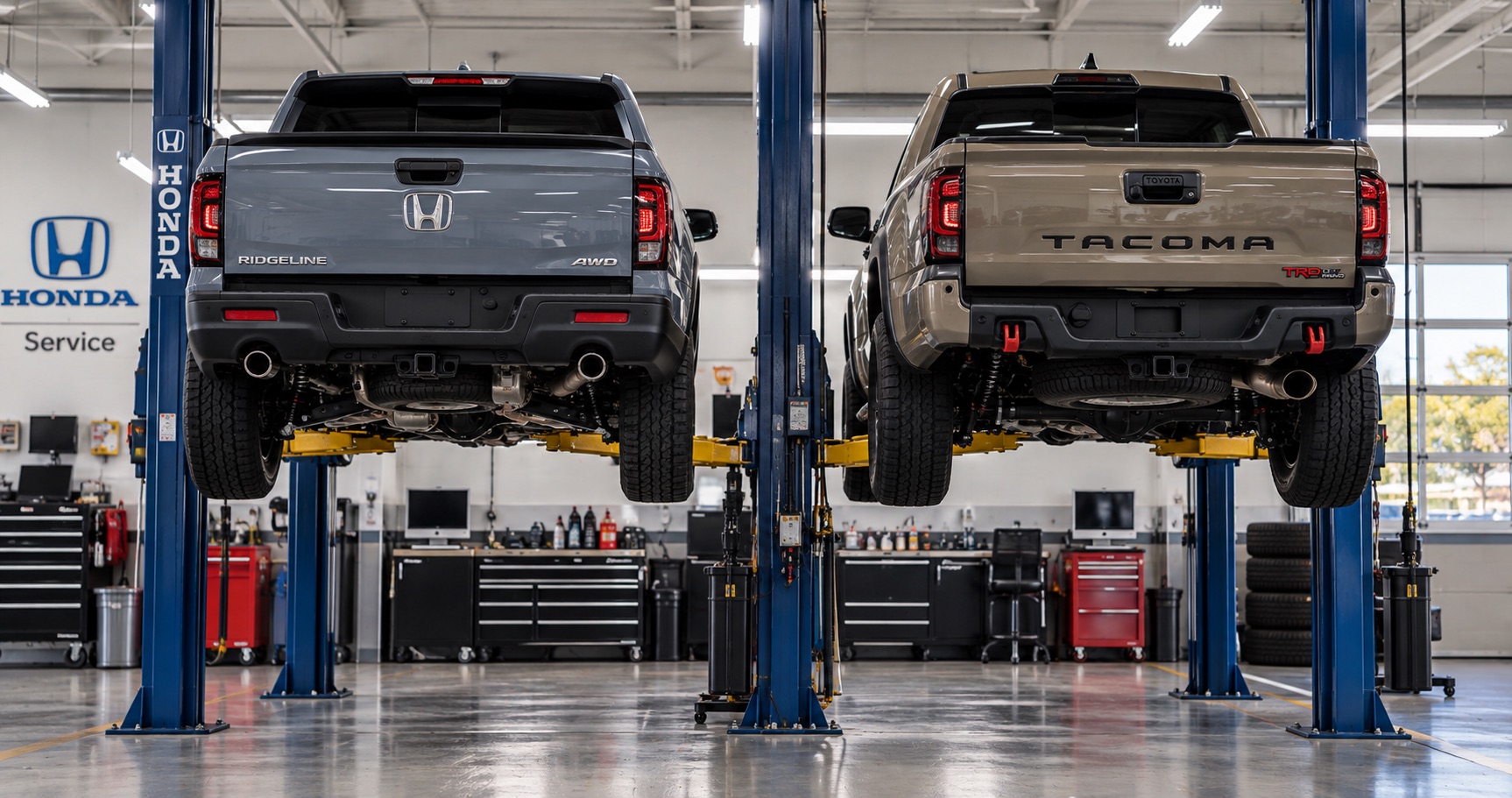
Reliability & Ownership Comparison
Toyota vs Honda Reliability: Which Brand Is More Reliable?
Two Strong Reliability Reputations—So What Actually Separates Them?
Toyota and Honda have both spent decades building reputations around dependable vehicles, which is exactly why shoppers compare them so closely. The useful question is not whether one brand is reliable and the other is not—it is whether today’s reliability data gives either one a meaningful advantage, and whether that advantage still holds when you compare the model and model year you would actually own.
This guide starts with current brand-wide surveys and historical repair patterns, then moves into best-year model scores for the Honda and Toyota vehicles shoppers commonly cross-shop. That second layer matters because model-level results can narrow, erase, or reverse a broad brand advantage. For Middletown and Hudson Valley drivers, mileage, maintenance history, winter-road exposure, and vehicle condition add another layer that can matter more to a real purchase than the badge alone.
Buyer-Fit Shortcuts
Where Are You in the Reliability Decision?
Start with the situation that sounds most like your shopping process. The result points you toward the reliability information that deserves the most attention next.
Based on Your Shopping Situation
A Honda Already Fits My Needs
Honda Remains a Strong Reliability Choice
Who This Fits
Shoppers who already like the fit, features, value, or driving experience of a Honda and want to know whether the reliability evidence supports keeping Honda firmly in the mix.
What to Do Next
Honda remains one of the stronger reliability brands in the evidence reviewed here. The broad brand data gives Toyota an early edge, but repair-history and model-year evidence shows the comparison can become much closer once you narrow to the vehicles shoppers actually cross-shop. If a Honda fits your needs, budget, or driving preferences better, the brand-level reliability difference alone is not a strong reason to walk away.
Toyota vs Honda Reliability in 60 SecondsThe short version before you dig into the data
Which brand has the stronger current reliability result?
Toyota. Consumer Reports places Toyota ahead of Honda in the current new-car brand reliability ranking reviewed for this article, while both brands remain near the top.
Do specific Honda and Toyota models tell the same story?
Not always. The model-year comparison below shows several common cross-shops separated by only a few points, with Honda leading or tying some matchups and Toyota leading others.
Do repair costs clearly favor one brand?
Not from the evidence reviewed here. Consumer Reports favors Toyota in its current maintenance-and-repair ranking, while RepairPal’s Honda and Toyota data is much closer to a tie and gives Honda small advantages on average annual cost and severe-repair probability.
What should matter most once I pick a model?
Move from the brand to the exact model year and powertrain, then add service records, recall status, warranty coverage, and condition. A strong score for one year should not be treated as a prediction for every version of that model.
Middletown & Hudson Valley Ownership
What Reliability Looks Like in Real Local Driving
A brand ranking is useful context, but the way a vehicle has been used and cared for becomes more important as miles and winters add up.
Daily Route 211 & I-84 Miles
For regular commuting, a well-documented maintenance history and fewer unexpected service interruptions can matter more day to day than a small difference in a brand score.
Used Vehicles & Hudson Valley Winters
On a used Honda or Toyota, inspect the underbody and corrosion condition, then look closely at brakes, tires, service records, prior repairs, and recall completion. The individual vehicle has already written part of its reliability story.
Weekend & Regional Travel
For longer drives toward Warwick, Newburgh, Port Jervis, or farther through the Hudson Valley, confidence in the exact model, powertrain, tires, and maintenance condition matters more than simply choosing the badge with the higher rank.
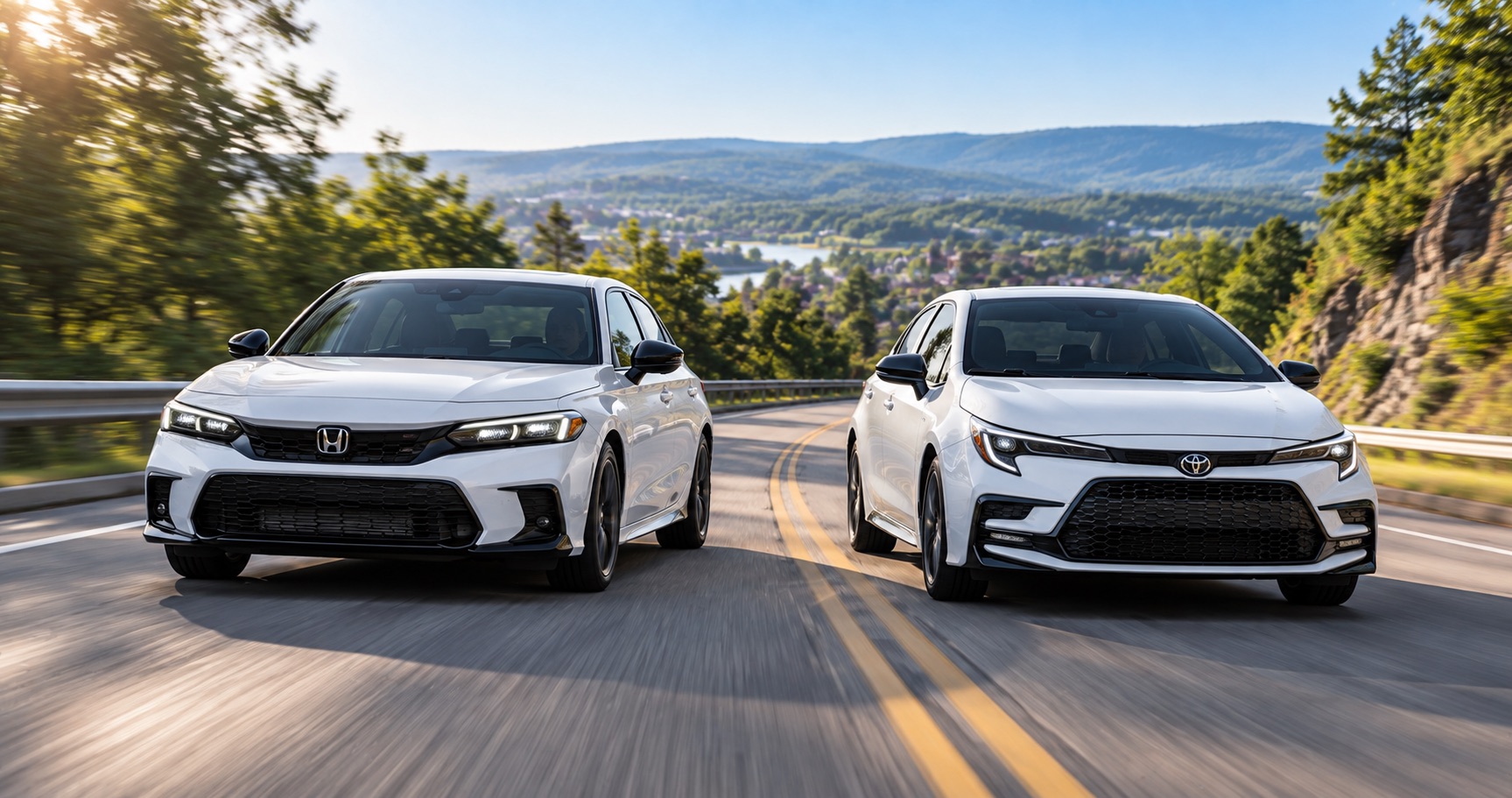
Compare Toyota vs Honda Reliability
Start with the brand-wide numbers, then use the remaining panels for the questions those rankings cannot answer on their own: why the sources differ, how recalls should be read, and what warranty coverage changes for an actual owner. After that, the model-year section compares common Honda and Toyota cross-shops to show how much the picture can change once the badge gives way to a specific nameplate.
Model-Year Reliability
What Happens When You Compare the Models Shoppers Actually Cross-Shop?
Auto Reliability Index’s Best Year Score charts show the highest-scoring single model year currently tracked for each nameplate. They are not averages across every year, but they add a useful second layer to the brand rankings: once common Honda and Toyota cross-shops are lined up, several are ties or near-ties, and the advantage does not always stay with the same brand.
| Common Cross-Shop | Honda Best Year Score | Toyota Best Year Score |
|---|---|---|
| Subcompact SUVs | HR-V: 100 / 100 2026 model year |
Corolla Cross: 94 / 100 2026 model year |
| Compact Cars | Civic: 94 / 100 2026 model year |
Corolla: 94 / 100 2026 model year |
| Midsize Cars | Accord: 87 / 100 2026 model year |
Camry: 88 / 100 2026 model year |
| Compact SUVs | CR-V: 83 / 100 2026 model year |
RAV4: 84 / 100 2025 model year |
| Adventure SUVs | Passport: 84 / 100 2026 model year |
4Runner: 84 / 100 2026 model year |
| Three-Row SUVs | Pilot: 81 / 100 2026 model year |
Highlander: 84 / 100 2026 model year |
| Midsize Pickups | Ridgeline: 86 / 100 2026 model year |
Tacoma: 82 / 100 2026 model year |
| Minivans | Odyssey: 74 / 100 2026 model year |
Sienna: 81 / 100 2026 model year |
| Best Year Score is the highest-scoring single model year currently shown for each model, not an average across every year. Auto Reliability Index notes that recent model years can have limited data while complaints and recalls accumulate, so these scores can change. Use the comparison as model-year context, then verify the exact year and vehicle you are considering. | ||
The Brand Ranking Does Not Decide Every Matchup
Six of these eight common cross-shops are either Honda wins, ties, or separated by a single point: HR-V leads Corolla Cross, Ridgeline leads Tacoma, Civic and Corolla tie, Passport and 4Runner tie, and only one point separates Accord from Camry and CR-V from RAV4. Toyota leads the Pilot/Highlander and Odyssey/Sienna pairings, with the larger gap in the minivan matchup. The pattern reinforces why the specific model year deserves more weight as your shortlist gets narrower.
A Broader Honda Safety Milestone
Honda Becomes the First to Earn the
FIA’s New Five-Star Road Safety Index Rating
Reliability is only one part of long-term confidence in a vehicle brand. In September 2026, Honda became the first organization to receive the FIA Road Safety Index’s new maximum five-star rating in the products/services category. The expanded assessment looks beyond an individual crash test to how deeply road safety is built into an organization’s planning, performance monitoring, safety culture, and products and services.
The recognition does not determine whether a particular Honda will be more reliable than a particular Toyota, but it adds meaningful independent context around Honda’s broader commitment to vehicle and road safety.
Have a Honda in Mind?
Check the Vehicle, Not Just the Badge
Once a Honda reaches your shortlist, move from brand research to the vehicle you would actually own. Use the model-year scores as context, then check the exact year’s reliability history, recall status, service record, and condition before building the purchase around a realistic trade value and budget.
Where the Evidence Lands
So, Is Toyota or Honda More Reliable?
Toyota has the stronger current brand-wide result, but the full picture is closer than the #1-versus-#4 ranking may initially suggest. Consumer Reports gives Toyota a 66 predicted-reliability score to Honda’s 59. RepairPal’s Honda and Toyota data is closer still: the brands share the same 4.0/5.0 rating and roughly the same repair-shop frequency, with small Honda advantages in average annual repair cost and severe-repair probability. Toyota therefore holds the current survey lead, but that broad result is only the first layer.
The model-year comparison above makes that limitation tangible. Civic and Corolla tie at their best-year peaks, Passport and 4Runner tie, Honda’s HR-V and Ridgeline lead their common Toyota cross-shops, and Accord/Camry plus CR-V/RAV4 are separated by only one point. Toyota leads the Pilot/Highlander and Odyssey/Sienna pairings. Once you have a specific Honda and Toyota in mind, let the exact model year, powertrain, service history, recalls, warranty coverage, and condition break the tie. Around Middletown and the Hudson Valley, that is especially important for higher-mileage commuters and used vehicles that have already seen years of winter roads.
Separately from reliability, Honda also brings a notable current safety credential: in September 2026, it became the first organization to earn the FIA Road Safety Index’s new maximum five-star rating in the products/services category. Brand reputation can get a vehicle onto the shortlist; the evidence for the exact vehicle—and how well it fits your life—should earn the final confidence.
Toyota vs Honda Reliability FAQs
Long-Term Ownership Support
Why Middletown Honda Makes the Ownership Side Easier
Middletown Honda has served Orange County for more than 30 years and has been family-owned since the late 1990s. That local history gives shoppers one place to return for the purchase, routine maintenance, recall questions, and eventually the next trade—not just a one-time transaction.
The MH Advantage can also make a reliability-conscious purchase easier to live with. Hassle Free Pricing gives you a clearer starting number, while the 72-hour exchange policy on eligible pre-owned vehicles gives used-car shoppers time to make sure the vehicle still feels right after real-world driving.
After the sale, Honda-Certified technicians, Genuine Honda Parts, Honda recall support, and no-appointment Express Service help simplify routine ownership. For drivers fitting service around Route 211 errands, I-84 commuting, or trips across Orange County and the Hudson Valley, easier access to maintenance can be just as valuable as the reliability research that started the purchase.
Where to Go Next
Start Shopping
Move From Research to the Honda You Want
Research Next
Move to the Honda Model You’re Considering
Disclaimers:
*Consumer Reports reliability and maintenance/repair-cost rankings, RepairPal repair metrics, and Auto Reliability Index Best Year Scores were checked September 11, 2026 and may change as new survey, complaint, recall, and repair data becomes available. The sources use different methodologies, populations, and time horizons; their figures are not combined into a composite score.
*RepairPal states that its Reliability Rating covers 2010-2019 model-year vehicles and evaluates cost, frequency, and severity of unscheduled repairs and maintenance. Historical brand-wide results do not predict the repair cost or failure rate of every current vehicle.
*Auto Reliability Index Best Year Score is the highest-scoring single model year currently shown for each model, not an average across every model year. Its methodology combines NHTSA complaint severity, repair-cost information, recall impact, and issue diversity, and the site notes that recent model years can have limited data while complaints and recalls accumulate. Scores can change as new data is added.
*Recall discussion is framework-based rather than an exhaustive campaign list. Safety recalls should be completed promptly when they apply. Recall scope, VIN-level eligibility, open-recall status, remedy availability, and campaign details can change over time.
*Warranty and included-maintenance coverage is subject to each manufacturer’s full terms, exclusions, vehicle/program eligibility, in-service date, mileage, state/emissions rules, and applicable warranty or maintenance-program documents. Coverage length is ownership protection, not proof of failure frequency.
*The FIA Road Safety Index five-star recognition discussed here applies to Honda as an organization in the products/services category; it is not an individual-vehicle crash-test rating or a reliability score.
*Middletown Honda inventory, pricing, financing paths, trade tools, service availability, and dealership programs can change. Verify current vehicle availability and the terms that apply when you shop or schedule service.